

You’ve probably heard it before — a well-meaning friend, a travel blogger, or that one coworker who’s always flying somewhere swears that booking your hotel on a Sunday (or a Friday, or a Tuesday — depending on who you ask) will save you serious cash. It sounds like a simple life hack: pick the right day, book your room, and watch the savings roll in. But is there actually any truth to this popular travel tip? Or is it just another piece of internet folklore that refuses to die? The honest answer is more nuanced than a single “best day” — and understanding the real drivers of hotel pricing could save you far more money than any booking-day myth ever could.

The Popular Belief: What Most Travelers Have Heard
Ask around, and you’ll get wildly different answers. Some travelers insist that Sunday is the golden day to score cheap hotel rates. Others swear by Friday. A few claim that midweek bookings — Tuesday or Wednesday — are the secret weapon for budget-conscious travelers. These beliefs have spread across travel forums, personal finance blogs, and social media threads for years, often cited with great confidence and very little evidence.
Where did these ideas come from? Mostly from a mix of outdated studies, anecdotal experiences, and the human tendency to find patterns in noise. A few years back, some travel platforms did publish research suggesting minor price variations based on booking day. Those findings got picked up, simplified, repeated, and eventually distorted into universal rules that were never meant to be universal at all.
It’s easy to understand why travelers are eager to believe in a magic booking day. Hotel costs are one of the biggest expenses in any trip budget, and the idea that you can consistently cut that cost with one simple behavioral change is enormously appealing. Unfortunately, the reality of hotel pricing is far more complicated — and far more dynamic — than this kind of thinking suggests.
What the Research and Data Actually Say
Several major travel platforms have analyzed booking behavior and hotel pricing across days of the week. Studies from sources like Expedia, Hotels.com, and NerdWallet have found that yes, there are slight statistical variations in average hotel prices depending on the day of the week. But the keyword here is slight.
According to data from various industry reports, Sundays and Fridays sometimes show marginally lower average rates compared to other days of the week. Some analyses suggest that travelers who book on these days can save anywhere from 5% to 10% compared to peak booking days. That might sound meaningful — but before you start setting Sunday morning alarms, consider this: those are averages across millions of bookings, in different cities, different hotel types, and different seasons. The variation at the individual booking level is often negligible or entirely nonexistent.
The more important insight from the data is this: hotel pricing is dynamic, not static. Unlike airline tickets, which once had more predictable pricing windows, modern hotels use sophisticated revenue management software that adjusts rates in real time based on demand, occupancy levels, competitor pricing, upcoming local events, and dozens of other variables. A hotel’s price can change multiple times in a single day — and those changes have nothing to do with what day of the week it happens to be.
Perhaps the most overlooked distinction in this conversation is the difference between the day you book and the day you stay. Research consistently shows that the night you plan to check in has a far greater impact on pricing than the day you click “reserve.”
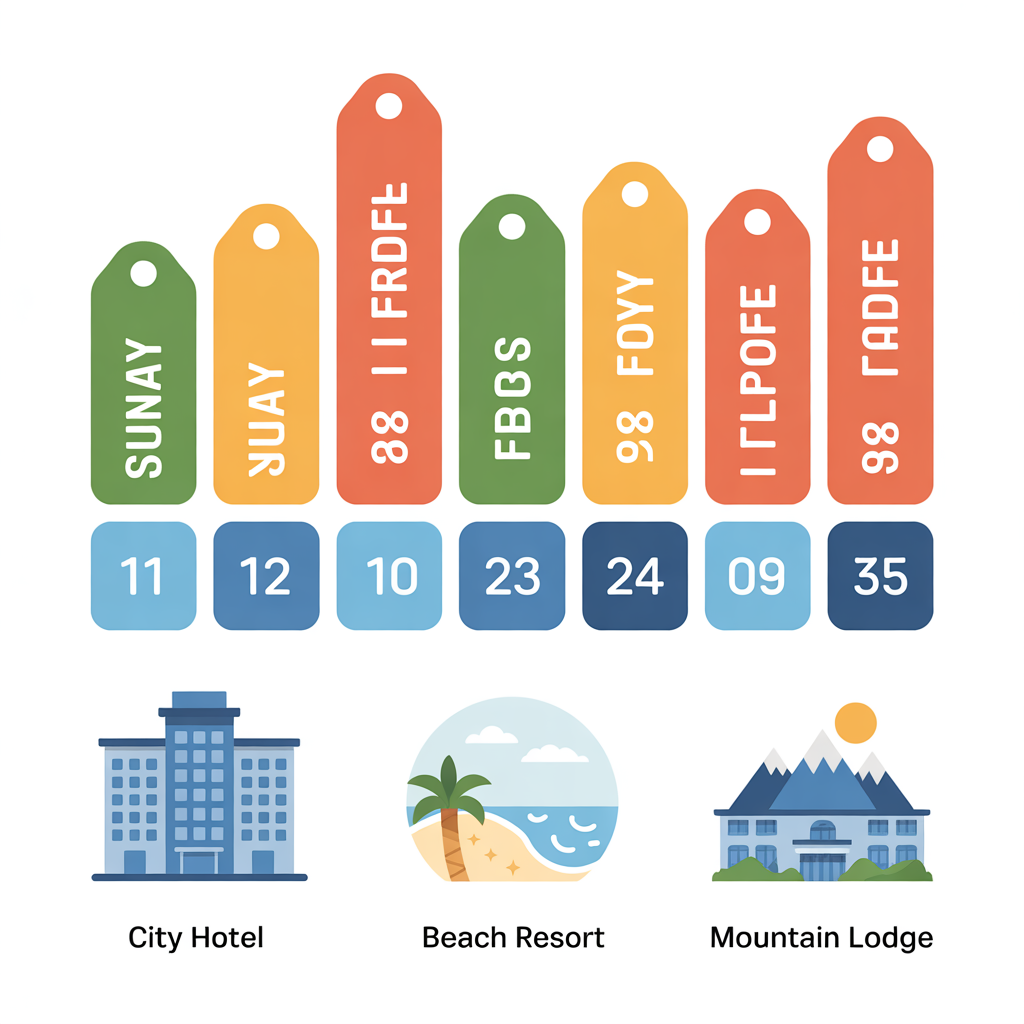
Factors That Matter Far More Than the Day You Book
How Far in Advance You Book
Timing matters enormously — but it’s about lead time, not day of the week. Booking too early or too late can both cost you. For most leisure travel, the sweet spot tends to be somewhere between one and three weeks before your stay. Hotels often release promotional rates in this window to fill remaining inventory, while very last-minute bookings can either score you a deal (if occupancy is low) or cost you premium rates (if the hotel is nearly full). For popular destinations or peak travel periods, booking earlier — sometimes two to three months out — gives you more options and often better baseline rates.
The Type of Hotel
Not all hotels price the same way. A business-oriented hotel in a major city center operates on a completely different demand curve than a beachfront resort or a mountain cabin property. Chain hotels with large corporate accounts behave differently from boutique independent properties. Understanding what kind of hotel you’re booking gives you much more pricing leverage than knowing what day of the week to click “book.”
The Day of the Week You Plan to Stay
This is where the real pricing insight lives. Business hotels — typically located in city centers and catering to corporate travelers — tend to fill up Monday through Thursday. That means their weekend rates (Friday and Saturday nights) are often significantly lower, sometimes dramatically so. On the flip side, leisure and resort hotels see their heaviest demand on weekends, making weekday stays considerably cheaper. If your schedule has any flexibility, aligning your stay with the hotel’s low-demand period can save you far more than any booking-day trick.
Seasonality and Local Events
A hotel in New Orleans during Mardi Gras and the same hotel on a quiet Tuesday in February are effectively two different products at two very different price points. High season, shoulder season, and low season create pricing bands that dwarf any day-of-the-week variation. Local conferences, sports championships, music festivals, and public holidays can send hotel rates soaring with almost no warning. Checking local event calendars before you book is one of the most underrated money-saving strategies available.
Loyalty Programs and Member Rates
Hotel loyalty programs have quietly become one of the best tools for consistent savings. Members-only rates are increasingly common across major chains like Marriott Bonvoy, Hilton Honors, and IHG One Rewards — and these discounts are typically available regardless of what day of the week you book. Signing up is free, and even as a low-tier member, you can access rates that aren’t available to the general public on third-party sites.
Platforms and Tools That Can Help You Find Better Rates
While there’s no magic booking day, there are genuinely useful tools that help you monitor and capture the best available prices. Google Hotels offers a clean interface with price history and filters that make comparison shopping easy. Hopper uses predictive algorithms to tell you whether to book now or wait for prices to drop. Trivago and Kayak aggregate rates from dozens of sources, giving you a quick snapshot of the pricing landscape.
One perennial question: does booking directly with the hotel beat third-party sites? Often, yes. Hotels prefer direct bookings because they avoid the commission fees paid to OTAs (Online Travel Agencies). As a result, many properties offer rate-match guarantees, complimentary upgrades, or added amenities for guests who book directly. It’s always worth checking the hotel’s own website alongside any aggregator results.
And what about browsing in incognito mode? The idea is that travel sites use cookies to detect repeat searches and artificially raise prices. The evidence for this practice is mixed at best, and most major booking platforms have denied it. That said, browsing in incognito mode costs nothing and takes seconds — so it doesn’t hurt to try.

Practical Tips to Actually Save Money on Hotel Bookings
Skip the obsession over booking day and focus on strategies that are proven to move the needle:
- Check multiple platforms before committing. Prices can vary significantly across Booking.com, Expedia, Hotels.com, the hotel’s own site, and others. Spend five minutes comparing before you pay.
- Set up price alerts. Google Hotels and Kayak both allow you to monitor rates for specific properties or destinations and receive notifications when prices change.
- Book refundable rates and rebook if prices drop. If a hotel offers free cancellation, book it now, then keep monitoring. If the rate drops, cancel and rebook at the lower price. This strategy alone can save you a meaningful amount.
- Look for package deals. Flight-plus-hotel bundles on Expedia, Priceline, or Google Travel can sometimes offer combined savings that beat booking each component separately.
- Watch for flash sales. Major chains and OTAs regularly run limited-time promotions. Subscribing to email newsletters or deal alerts from your favorite platforms puts you first in line for these offers.
- Read the cancellation policy carefully. A seemingly cheap rate locked into a non-refundable booking can turn into an expensive mistake if your plans change. Flexibility has real financial value.
So, Is There a “Best Day” After All? — The Verdict
After looking at the research and the mechanics of hotel pricing, the honest verdict is: no single universally best day to book a hotel exists. If any pattern shows up consistently in the data, it’s that Sundays and Fridays have shown slightly lower average rates in some studies — but the margins are small, the variation is highly dependent on context, and the pattern is far from reliable.
The real takeaway is this: flexibility, timing, and strategy will save you far more money than fixating on the day of the week you click “book.” Focus on when you plan to stay (matching your stay to the hotel’s low-demand period), how far in advance you book (finding the sweet spot for your destination and travel type), and what type of hotel you’re booking (understanding its demand patterns). Layer in loyalty programs, price tracking tools, and a willingness to comparison shop, and you’ll build a genuinely effective hotel savings strategy.
Conclusion
The myth of the single “best booking day” has a certain comforting simplicity to it — but hotel pricing doesn’t work that way. Modern revenue management systems are too sophisticated, demand is too variable, and the factors that actually drive prices are too numerous for one tip to rule them all. What does work is a combination of smart timing, platform awareness, loyalty memberships, and a flexible mindset about when and where you stay.
Use the practical tips in this guide as your real booking strategy, and you’ll find that the savings are real — they’re just not hiding behind a specific day of the week. Ready to start planning smarter? Explore more expert travel tips, hotel insights, and destination guides at RoomNetic.com — your partner in finding the right room at the right price.