

Every traveler knows the feeling: you’ve found your dream hotel, and now you’re staring at two options — book directly through the hotel’s website or click through to Booking.com, Expedia, or Agoda where the price looks just slightly different. It’s a split-second decision that millions of people make every day, yet few truly understand the full implications of that choice. The truth is, whether you book direct or through an Online Travel Agency (OTA) can affect everything from the price you pay and the room you receive to how easily you can cancel and whether you earn valuable loyalty points. This guide breaks down everything you need to know so you can stop guessing and start booking smarter.
What Are Online Travel Agencies (OTAs)?
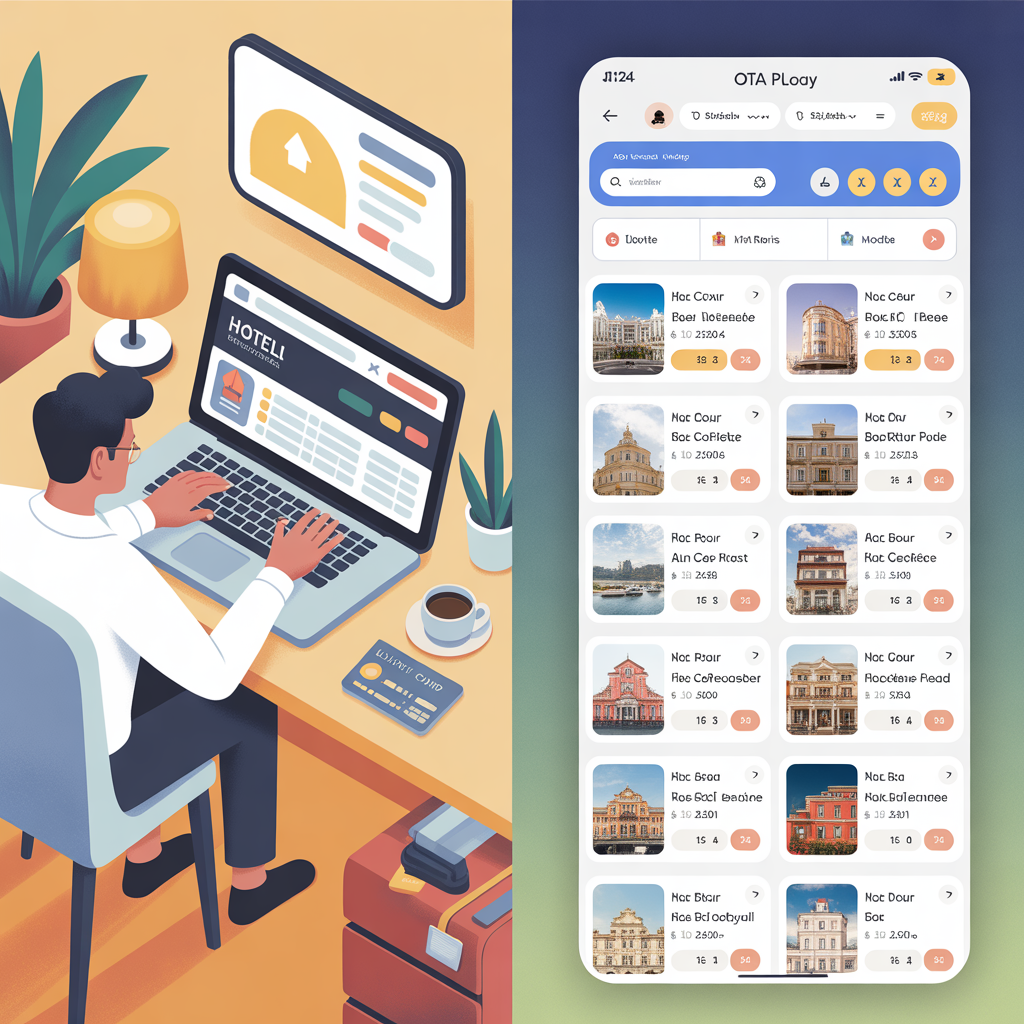
Online Travel Agencies are third-party platforms that aggregate travel inventory — hotels, flights, rental cars, vacation packages — and sell them to consumers through a single interface. Rather than owning any travel product themselves, OTAs act as intermediaries between travelers and travel providers.
Some of the biggest names in the OTA space include:
- Booking.com — The world’s largest accommodation platform
- Expedia — A full-service travel portal offering flights, hotels, and packages
- Hotels.com — Hotel-focused with its own loyalty stamp card program
- Agoda — Particularly strong in Asia-Pacific markets
- Kayak — A meta-search engine that aggregates OTA and direct prices
- Priceline — Known for its “Name Your Own Price” and Express Deals features
OTAs generate revenue through a commission-based model, typically charging hotels between 15% and 30% of each booking’s value. This business model has fueled explosive growth — today, OTAs account for roughly 40% of all hotel bookings globally, making them a dominant force in the travel industry. Their rise has fundamentally changed how travelers discover, compare, and purchase travel experiences.
What Does “Booking Direct” Mean?
Booking direct simply means reserving your accommodation, flight, or tour through the provider’s own channels — their official website, mobile app, or by calling the property directly. No middleman, no third-party platform involved.
Hotels and airlines have strong financial incentives to encourage direct bookings. When a guest books through an OTA, the property pays a significant commission that chips away at profit margins. By securing direct reservations, hotels keep more revenue per booking and gain more control over the guest relationship from start to finish.
This motivation gave rise to the “Book Direct” movement in the mid-2010s, when major hotel chains like Marriott, Hilton, Hyatt, and IHG launched aggressive campaigns offering exclusive perks — lower rates, free Wi-Fi, bonus loyalty points — to guests who bypassed OTAs and booked through official channels. The movement shifted traveler behavior meaningfully and sparked an ongoing competition between hotels and OTA platforms over the hearts, minds, and wallets of travelers.
Booking Direct: Pros and Cons
The Advantages of Booking Direct
Best Rate Guarantees: Most major hotel chains now offer a lowest rate guarantee, promising to match or beat any price found on a third-party site. This effectively eliminates one of the biggest historical advantages OTAs held — the perception of cheaper prices.
Loyalty Points and Rewards: This is one of the most compelling reasons to book direct. Programs like Marriott Bonvoy, Hilton Honors, World of Hyatt, and IHG One Rewards only award elite points and tier credits when you book through official channels. Over time, these points can translate into free nights, room upgrades, and exclusive experiences worth hundreds or even thousands of dollars.
Better Room Assignments and Upgrades: Hotels have full discretion over room assignments, and direct bookers — especially loyalty members — are consistently prioritized for complimentary upgrades and preferred room locations. OTA guests are often given the most basic available rooms.
More Flexible Cancellation Policies: Direct reservations are far easier to modify or cancel. Changes are handled directly with the property, without navigating a third party’s policies, which can vary wildly and add friction to the process.
Direct Communication with the Property: Celebrating an anniversary? Need an accessible room? Want to arrange a surprise? When you book direct, you can communicate special requests directly to the hotel team, who can actually act on them rather than relay messages through an OTA’s systems.
Exclusive Perks: Many hotels offer complimentary amenities exclusively to direct bookers — free breakfast, resort credits, welcome amenities, early check-in, and late check-out. These value-adds can easily exceed the cost of any OTA discount.
No Third-Party Complications: If something goes wrong — an overbooked room, a billing dispute, a service issue — dealing directly with the hotel is significantly faster and simpler than routing complaints through an OTA’s customer service system.
Supporting the Business Directly: When you book direct, the property retains the full room rate without paying OTA commissions. For independent boutique hotels and small family-run properties, this can make a genuine financial difference.
The Disadvantages of Booking Direct
Time-Consuming Comparison Shopping: Booking direct requires visiting multiple hotel websites individually to compare options, which can be tedious and time-consuming compared to scanning an OTA’s filtered results in seconds.
Limited Discovery: OTAs excel at surfacing hotels you might never have found on your own. Booking direct means you need to already know which property you want, limiting opportunities to discover hidden gems.
Fewer Advantages for Non-Loyalty Members: Many of the best direct booking perks are gated behind loyalty membership. Infrequent travelers who haven’t joined programs may find that direct booking offers little advantage over OTAs.
No Package Deals: Direct booking platforms generally can’t bundle flights, hotels, and car rentals into a single discounted package — a significant drawback for travelers looking to streamline planning and save money on comprehensive trip packages.

Booking via OTAs: Pros and Cons
The Advantages of Using OTAs
Unmatched Convenience and Comparison: The single biggest advantage of OTAs is their ability to show you hundreds of options side by side in seconds. Filter by price, star rating, neighborhood, amenities, and guest score — then book in a few clicks. For time-strapped travelers, this efficiency is invaluable.
Competitive Pricing and Exclusive Deals: OTAs regularly offer flash sales, member-exclusive prices, and last-minute discounts that can genuinely undercut direct booking rates. Booking.com’s Genius program and Expedia’s member prices are notable examples of OTA-specific pricing that can deliver real savings.
Package Deals and Bundled Savings: Booking flights, hotels, and car rentals together through platforms like Expedia or Priceline often unlocks bundle discounts that would be impossible to replicate by booking each component separately. This is a genuine financial advantage for full-trip planners.
Access to Verified User Reviews: OTAs have aggregated millions of authentic traveler reviews, giving you social proof that goes far beyond what a hotel’s own website can provide. Seeing a property’s real-world performance from thousands of guests is invaluable when choosing between options.
OTA Loyalty Programs: While not as lucrative as hotel loyalty programs, OTAs have built their own reward systems. Hotels.com’s loyalty program offers a free night after every ten booked. Booking.com’s Genius membership unlocks discounts and upgrades across the platform. These perks benefit travelers who don’t concentrate stays with one hotel chain.
Wide Inventory: OTAs list properties that may not have sophisticated direct booking infrastructure — small guesthouses, boutique rentals, budget hostels. This breadth of inventory makes OTAs particularly valuable when exploring less mainstream destinations.
International Accessibility: For global travelers, OTAs offer multi-currency pricing, multi-language support, and internationally accepted payment methods that simplify cross-border booking considerably.
Traveler Protection Programs: Several OTAs offer booking guarantees, price drop protection, and traveler assistance programs that provide an extra safety net — particularly useful when booking properties in unfamiliar markets.
The Disadvantages of Using OTAs
Hidden Fees at Checkout: OTAs are notorious for displaying attractive base prices only to add taxes, service fees, and processing charges at checkout. The final price is often meaningfully higher than the advertised rate — always check the total before committing.
No Hotel Loyalty Points: The vast majority of hotel loyalty programs will not award points or elite night credits for reservations made through OTAs. For frequent travelers working toward elite status or free night awards, this is a significant long-term cost.
Lower Priority Treatment: Hotels openly acknowledge that OTA guests receive less priority than direct bookers when it comes to room assignments, upgrades, and special requests. You’re a guest of the OTA first, the hotel second — and hotel staff treat reservations accordingly.
Complicated Cancellation and Modification: When you need to change or cancel an OTA booking, you must navigate the OTA’s specific policies, which are often more restrictive than what the hotel itself offers. Refunds can take weeks, and getting help can mean long waits on customer service lines.
Overbooking and Dispute Resolution: When hotels overbook and need to “walk” a guest to another property, OTA guests are statistically the first to be moved. Without a direct relationship with the hotel, resolving issues requires going through the OTA — adding a frustrating layer of complexity at the worst possible moment.
Inaccurate or Outdated Listings: OTA listings can contain outdated photos, incorrect amenity information, or stale availability data. Always cross-check a property’s official website to verify what you’re actually booking.
Commission Costs Potentially Passed to Consumers: Some hotels inflate their OTA-listed rates slightly to recoup commission costs, meaning you may actually pay more through an OTA than booking direct — particularly at independent properties that face the highest OTA commission rates.
Head-to-Head Comparison: Key Decision Factors
| Factor | Booking Direct | OTAs |
|---|---|---|
| Price | Often competitive with best rate guarantees | Can be cheaper with deals and bundles |
| Flexibility | Higher — easier to modify or cancel | Lower — subject to OTA policies |
| Loyalty Rewards | Yes — full points and elite credit | Rarely — most chains exclude OTA bookings |
| Convenience | Lower — must visit each property site | Higher — everything in one place |
| Customer Support | Direct with the property | Through a third-party intermediary |
| Room Upgrades | More likely — direct bookers prioritized | Less likely — lower priority |
| Package Deals | Not available | Yes — flight + hotel + car bundles |
| Discovery | Limited — need to know what you want | Excellent — wide inventory and filters |
When Should You Book Direct?
Booking direct makes the most sense in several specific scenarios:
- You’re a loyalty program member: If you’re earning points toward free nights or elite status, booking direct is non-negotiable. The long-term value of loyalty rewards almost always outweighs any short-term OTA discount.
- You have special requests: Celebrating a milestone, traveling with dietary restrictions, or requiring accessibility accommodations? Direct booking ensures your needs are communicated clearly to the people who can actually fulfill them.
- Traveling during peak seasons: When demand is high and issues are more likely to arise, having a direct relationship with the hotel gives you significantly more leverage and protection.
- Staying at independent boutique hotels: These properties often offer better direct rates (to avoid heavy OTA commissions) and can provide more personalized service when you book through them directly.
- Long stays where flexibility matters: For week-long or multi-week reservations, the ability to modify your booking without OTA complications is worth prioritizing.
- International travel requiring direct support: Language barriers and time zone differences make direct communication with your property more valuable than ever.
When Should You Use an OTA?
OTAs remain the superior choice in equally specific circumstances:
- Comparing multiple destinations or properties quickly: When you’re still in the research phase and haven’t decided where to stay, OTAs save you enormous time by consolidating options.
- Hunting for last-minute deals: OTAs regularly offer deep last-minute discounts as hotels try to fill unsold inventory, making them ideal for spontaneous travelers.
- Booking comprehensive trip packages: Flight-hotel-car bundles through OTAs can deliver genuine savings that are impossible to replicate through individual direct bookings.
- Exploring unfamiliar destinations: OTA reviews and ratings provide crowd-sourced intelligence that helps you make confident choices in places you’ve never visited before.
- When you have no loyalty membership: Without points to earn, the flexibility and pricing advantages of OTAs become more compelling.
- Budget-first travel: For travelers whose primary goal is the lowest possible price, OTA deal-hunting and package discounts often win on pure cost.

Pro Tips: How to Get the Best of Both Worlds
The smartest travelers don’t choose one approach exclusively — they use both strategically. Here’s how:
- Use OTAs to research, then book direct: Browse OTAs to discover properties and compare prices, then visit the hotel’s official website to book. Many hotels’ best rate guarantees will match the OTA price while adding direct booking perks on top.
- Join hotel loyalty programs — even free tiers: Simply being a member of a hotel’s loyalty program — at no cost — often unlocks member-only direct rates that equal or beat OTA prices, plus basic perks like free Wi-Fi or room preferences.
- Always compare total costs: That attractive OTA rate looks different once taxes and service fees are added. Compare the final all-in price against the hotel’s direct rate before making your decision.
- Call the hotel directly: This underused strategy can yield rates that beat both the hotel’s website and OTA prices. Front desk agents sometimes have access to unadvertised rates and genuine flexibility on price.
- Use the OTA price as leverage: Found a lower price on an OTA? Call the hotel, share the rate, and ask them to match it for a direct booking. Many properties will — and you’ll gain all the benefits of booking direct in the process.
- Always check the hotel’s official website last: Before finalizing any reservation, make one final visit to the property’s official site. It takes two minutes and could save you money or unlock additional value.
Frequently Asked Questions
Is it always cheaper to book directly with a hotel?
Not always, but often. Major hotel chains with best rate guarantee programs are typically price-competitive with OTAs. Where direct booking truly wins is in total value — when you factor in loyalty points, potential upgrades, and exclusive perks, the direct booking often delivers more for the same or similar price.
Do OTAs offer better cancellation policies than booking direct?
Generally, no. While some OTA platforms advertise “free cancellation” options, their refund and modification processes are more complex and time-consuming than dealing directly with a hotel. Direct bookings offer greater flexibility and simpler resolution when plans change.
Can I earn loyalty points when booking through an OTA?
In most cases, no. Major hotel chains including Marriott, Hilton, Hyatt, and IHG explicitly exclude OTA bookings from point earning and elite night credit accumulation. Some OTAs have their own reward programs, but these don’t transfer to hotel loyalty accounts.
What happens if my OTA booking goes wrong?
If issues arise — overbooking, room discrepancies, billing errors — you must work through the OTA’s customer service team rather than resolving matters directly with the hotel. This adds time and complexity to resolution. The hotel is also less motivated to go above and beyond for guests they effectively “rented” through a third party.
Are OTA reviews trustworthy?
Major OTAs like Booking.com and TripAdvisor have implemented verification systems that only allow guests who have completed a stay to leave reviews. These systems make OTA reviews generally reliable, though as with any platform, some manipulation exists. Cross-referencing reviews across multiple platforms gives the most accurate picture.
Do hotels treat OTA guests differently?
Yes — and hotel industry insiders confirm this openly. Hotels prioritize their direct-booking guests, particularly loyalty program members, for room assignments, upgrades, and service attention. OTA guests are served professionally, but they’re simply lower on the internal priority hierarchy.
Conclusion
The booking direct vs. OTA debate doesn’t have a universal winner — and that’s precisely the point. Both approaches have genuine strengths and meaningful weaknesses, and the best choice shifts depending on who you are as a traveler and what you’re trying to achieve with each specific trip.
Here’s a simple framework to guide your decision: If you’re a loyalty program member or staying at a property where the relationship matters — book direct, every time. If you’re deal-hunting, booking a full package, or still in the discovery phase of planning — leverage what OTAs do best. And when in doubt, use OTAs to research and then negotiate those same terms with the hotel directly.
The travelers who get the most value are those who understand both worlds well enough to move fluidly between them. Use every tool available to you, compare intelligently, and always book with intention rather than habit.
Have a strong opinion on booking direct vs. OTAs? We’d love to hear about your experiences in the comments below. For more practical travel tips, accommodation guides, and insider advice, explore the full Travel section at RoomNetic.com — your go-to resource for traveling smarter, not harder.