

You’ve done everything right — searched for weeks, compared dozens of options, and finally scored what looks like an incredible hotel deal. But when you check out, the bill is suddenly $80 more than expected. Sound familiar? Hidden hotel fees are one of travel’s most frustrating open secrets, and they’re costing travelers billions of dollars every year. Whether it’s a mysterious “resort fee,” a charge for touching the minibar, or a sneaky energy surcharge buried in the fine print, these unexpected costs can turn a budget-friendly trip into an expensive surprise. In this guide, we’re pulling back the curtain on the 10 most common hidden hotel fees — what they are, why hotels charge them, and exactly how to avoid them on your next stay.
Why Hotels Charge Hidden Fees in the First Place
Before we dive into the list, it’s worth understanding why hidden hotel fees exist at all. The short answer: it’s a deliberate business strategy.
The hospitality industry has increasingly adopted a practice called “unbundling” — breaking down the cost of a hotel stay into a base room rate plus a menu of add-on charges. This is sometimes called drip pricing, where the full cost of a product is only revealed to the customer incrementally, often at the very end of the booking process or at check-in.
Why does it work? Because a room listed at $99/night looks far more attractive on a search results page than a room listed at $149/night — even if both cost the same amount after all fees are applied. Hotels know that most travelers make booking decisions based on the headline price.
The numbers are staggering. According to research by the American Hotel and Lodging Association, U.S. hotels collect an estimated $2.9 billion in resort fees alone every single year. Add in parking, Wi-Fi, and other miscellaneous charges, and the total hidden fee burden on travelers climbs even higher.
The good news? Once you know what to look for, you can protect yourself. Let’s get into it.
The 10 Hidden Hotel Fees You Need to Watch Out For
Fee #1: Resort Fees / Destination Fees
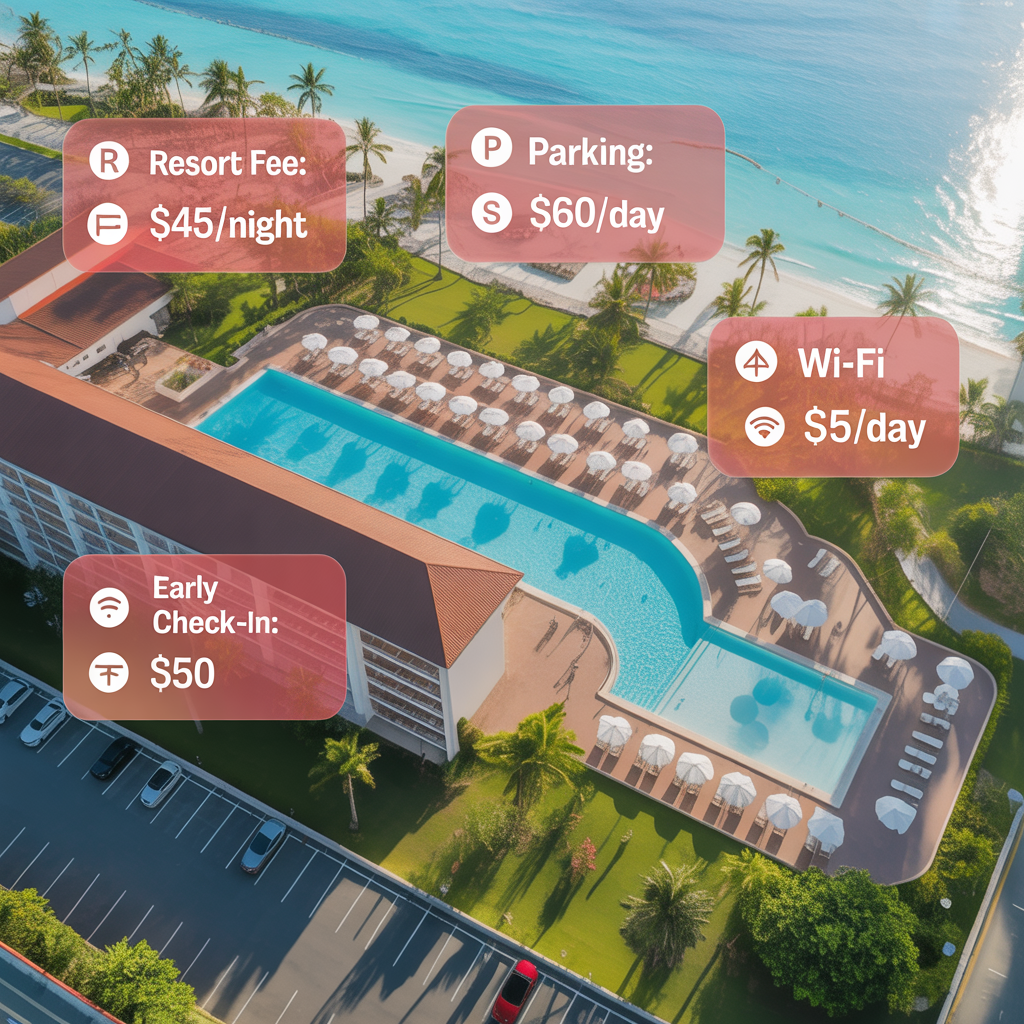
Resort fees are arguably the most controversial hidden charge in the hotel industry — and for good reason. These are mandatory daily charges that can range anywhere from $25 to $50+ per night, added on top of your room rate. You’ll encounter them most commonly at hotels in Las Vegas, Miami, Hawaii, and other tourist-heavy destinations.
Hotels justify resort fees by claiming they cover access to amenities like the pool, gym, beach chairs, Wi-Fi, newspaper delivery, or “local phone calls.” Here’s the catch: you’re charged whether you use those amenities or not. Staying in your room all day with no intention of hitting the spa? You’re still paying for it.
Some hotels have begun calling these “destination fees” to sound more legitimate, but the concept is identical — it’s a mandatory surcharge that inflates the true cost of your stay.
How to avoid it: Check sites like ResortFeeChecker.com before booking. Call the hotel directly and ask if the resort fee can be waived for loyalty members. In some cases, politely asking at check-in — especially for extended stays — can result in a partial or full waiver.
Fee #2: Wi-Fi Charges
In 2024, charging extra for in-room Wi-Fi feels absurd — yet it still happens more often than you’d think. Many hotels offer free Wi-Fi in lobbies and common areas while charging $10–$20 per day for in-room connectivity. Others use tiered pricing, where basic Wi-Fi is “free” but any speed actually usable for streaming or video calls costs extra.
Luxury hotels are often the biggest culprits here — ironically, budget chains like Holiday Inn Express and Hampton Inn have long offered free in-room Wi-Fi as a standard perk.
How to avoid it: Book with hotels that advertise free in-room Wi-Fi as a standard inclusion. Many hotel loyalty programs (Marriott Bonvoy, Hilton Honors, IHG One Rewards) include complimentary Wi-Fi for members, even at the basic membership tier. When in doubt, ask at check-in before connecting.
Fee #3: Parking Fees
If you’re driving to a city-center hotel, prepare yourself: daily parking fees can be eye-watering. In major U.S. cities like New York, San Francisco, or Chicago, hotel parking can cost $50–$80 per day for self-parking, and even more for valet. In some cases, the parking fee rivals the cost of the room itself.
The difference between self-parking and valet parking can also be surprisingly significant — valet often adds a $10–$20 tip expectation on top of an already steep daily rate.
How to avoid it: Before booking, research nearby public parking garages using apps like SpotHero or ParkWhiz, which often offer significantly cheaper pre-booked rates. If you must park at the hotel, always ask whether the fee is included in any packages. Hotels outside city centers or in suburban areas are far more likely to offer free parking.
Fee #4: Early Check-In / Late Check-Out Fees
Standard hotel check-in time is typically 3:00–4:00 PM, and check-out is usually 11:00 AM to noon. If your flight lands at 8 AM and you’d love to head straight to your room, or your evening flight means you’d like to keep your room until 3 PM, hotels may charge you for the privilege.
These fees vary widely — from a flat $25–$50 fee to up to half a night’s room rate for significant time adjustments. Some hotels won’t mention this option at all unless you specifically ask.
How to avoid it: Contact the hotel directly 24–48 hours before arrival and politely request early check-in or late check-out. Availability often allows for this at no charge. Loyalty program members — especially at higher tiers — are frequently granted these requests as a complimentary perk. Booking directly with the hotel rather than through a third-party platform also tends to give you more flexibility here.
Fee #5: Minibar & In-Room Refreshment Fees
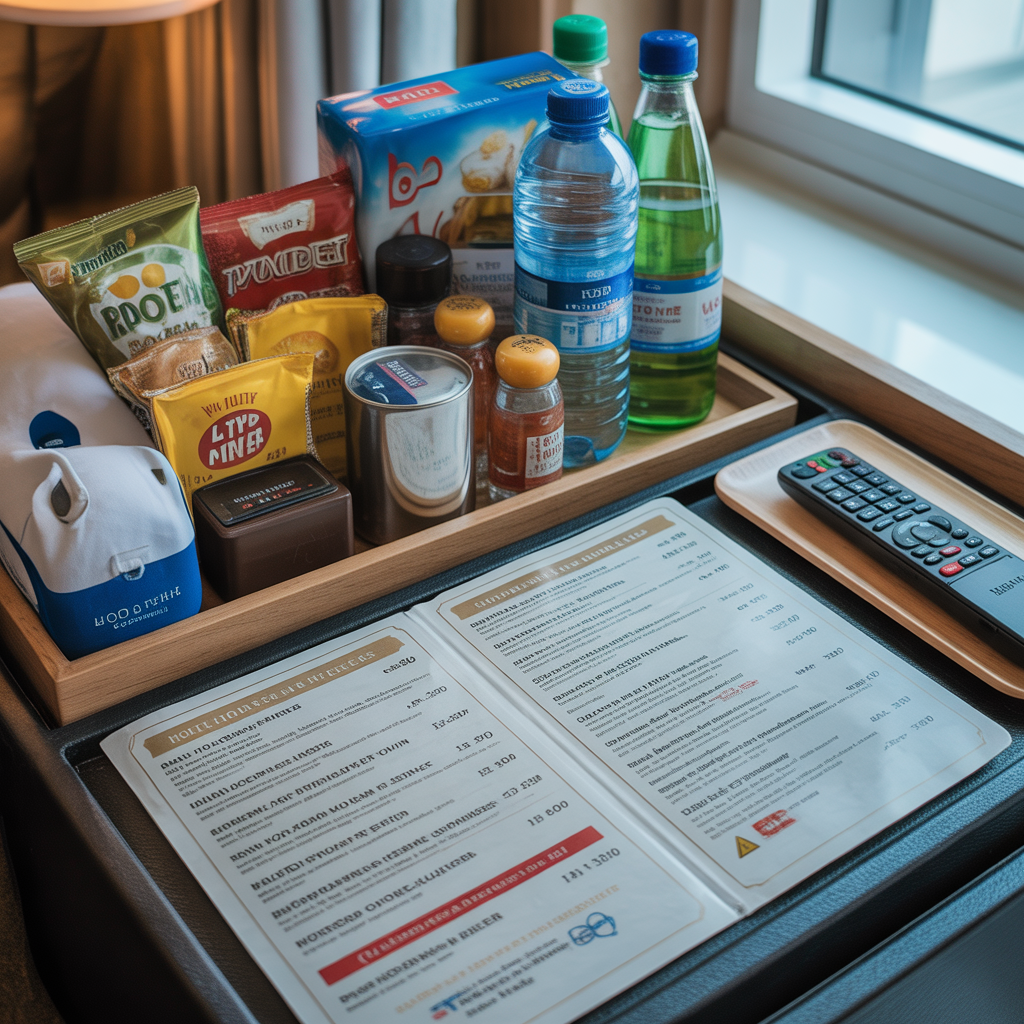
The in-room minibar has evolved from a convenient perk into something of a financial trap. Modern hotel minibars are increasingly equipped with weight-sensitive sensors that automatically log a charge to your account the moment you pick up an item — even if you immediately put it back. Some hotels even charge restocking fees if any item is moved from its designated spot.
A $6 bag of chips and a $9 bottle of water might not sound alarming on their own, but minibar charges have a way of adding up quickly, especially on multi-night stays.
How to avoid it: The simplest strategy is to avoid touching minibar items entirely unless you intend to consume them. Better yet, stop at a local convenience store or supermarket on your way to the hotel and stock your own snacks and drinks. If you’re traveling with kids and worried about accidental charges, ask the front desk if the minibar can be locked or emptied upon check-in — many hotels will accommodate this request.
Fee #6: Room Service & Delivery Fees
That burger listed for $18 on the room service menu? By the time you account for the delivery fee, service charge, and automatic gratuity, you could easily be paying $26–$28 for the same item. It’s not uncommon for a room service order to cost 30–40% more than the menu prices suggest once all fees are stacked.
Hotels often add a delivery fee ($3–$6), a service charge (18–22%), and sometimes an additional “in-room dining fee” as separate line items.
How to avoid it: Check whether the hotel has a casual grab-and-go café, lobby bar, or in-house restaurant where you can dine without the room service surcharges. Alternatively, explore nearby dining options — walking just a few blocks from most hotels will dramatically expand your options at a fraction of the price.
Fee #7: Amenity or Facility Fees
Not all hotels bundle amenity access into a resort fee — some charge for them entirely separately. This means you might pay a resort fee and still face additional charges for spa access, beach equipment rentals, fitness classes, tennis courts, or pool towels.
These fees are often disclosed only in the fine print of the booking terms, or communicated verbally by hotel staff when you actually try to use the amenity.
How to avoid it: Before booking — especially at resort properties — call the hotel and ask specifically which amenities are included in the room rate or resort fee, and which ones carry an extra charge. Request this information in writing if possible. On arrival, ask for an itemized list of what’s included during your stay.
Fee #8: In-Room Safe Fees
This one consistently surprises even experienced travelers. Some hotels charge a daily fee of $1–$5 simply for having an in-room safe available — regardless of whether you ever open it or use it. This charge is almost always buried several lines deep in your itemized bill, easy to miss if you’re not looking carefully.
The fee is rarely disclosed during the booking process, and front desk staff rarely mention it at check-in. For a week-long stay, this “small” fee can add $35+ to your bill without you even realizing it.
How to avoid it: Review your itemized bill carefully on checkout day. If you see a safe fee and you didn’t use the safe, politely ask the front desk to remove it. Most hotels will comply without resistance. You can also ask at check-in whether an in-room safe fee applies, and request that it be noted on your reservation that the amenity won’t be used.
Fee #9: Energy Surcharges / Housekeeping Fees
Two newer additions to the hidden hotel fee landscape have emerged in recent years. First, energy surcharges — particularly common in eco-tourism regions and island destinations — are daily fees of $5–$15 added to offset “environmental costs.” Second, the post-COVID era brought a new trend: optional or mandatory daily housekeeping fees.
During the pandemic, many hotels suspended daily housekeeping to reduce contact. Some kept this as a policy change and began charging extra if guests wanted their room cleaned. In other cases, “opting into” housekeeping has become an additional line item.
How to avoid it: Opting out of daily housekeeping is a legitimate way to reduce your bill (and it’s also better for the environment). When booking, ask upfront whether energy surcharges apply and whether housekeeping is included or optional. For extended stays, many hotels will negotiate a reduced housekeeping schedule at no extra charge.
Fee #10: Credit Card Processing / Foreign Transaction Fees
This final hidden fee often catches international travelers off guard — and it can come from multiple directions simultaneously. Your bank or credit card issuer may charge a foreign transaction fee of 1–3% on every purchase made abroad. On top of that, some international hotels add their own credit card surcharge for accepting card payments.
Then there’s the sneakiest trick of all: dynamic currency conversion (DCC). This is when a hotel’s payment terminal offers to charge your card in your home currency rather than the local currency. It sounds convenient, but the conversion rate used is almost always significantly worse than your bank’s rate, often adding 3–7% to your total bill.
How to avoid it: Travel with a credit card that charges no foreign transaction fees — popular options include the Chase Sapphire Preferred, Capital One Venture, or Charles Schwab debit card for international use. When paying at international hotels, always select the local currency when given the option at the payment terminal. Never accept dynamic currency conversion.
How to Spot and Avoid Hidden Hotel Fees Before You Book
Now that you know what to look for, here are the most effective strategies for keeping hidden hotel fees from catching you off guard:
- Read the fine print on booking platforms. Sites like Booking.com, Expedia, and Hotels.com are required to disclose mandatory fees, but they’re often listed in small text at the bottom of the pricing breakdown. Look for sections labeled “taxes and fees” or “additional charges” and expand them before confirming any reservation.
- Call the hotel directly. A simple phone call asking “Can you tell me about any mandatory fees that aren’t included in the displayed room rate?” can reveal charges that no booking platform shows upfront.
- Use dedicated hotel fee checkers. Websites like ResortFeeChecker.com catalog resort and destination fees by property, making it easy to factor in the true cost before you commit.
- Book directly through the hotel’s official website. Direct bookings often come with better pricing transparency, greater flexibility, and access to loyalty program benefits that can offset or eliminate common fees.
- Join hotel loyalty programs. Even free membership tiers at Marriott Bonvoy, Hilton Honors, Hyatt World of Hyatt, and IHG One Rewards often include perks like free Wi-Fi, late check-out, or waived resort fees.
- Read recent guest reviews. TripAdvisor and Google Reviews are goldmines for fee warnings. Search for the word “fee” or “charge” in recent reviews to see what current guests are reporting.
- Request an itemized bill at check-in and check-out. This gives you a clear record of what you’re being charged and creates an opportunity to dispute anything unexpected before you leave.
- Don’t be afraid to negotiate. Many fees — particularly resort fees and early check-in charges — can be partially or fully waived simply by asking politely. The worst a hotel can say is no.
What to Do If You’ve Already Been Charged
Discovered an unexpected charge after the fact? Don’t panic — and don’t just accept it. Here’s how to push back effectively:
- Review your itemized receipt before leaving the property. This is your best opportunity to address discrepancies while still on-site.
- Speak to the front desk manager calmly and politely. Explain which charges you weren’t informed of and ask for clarification or removal. Having documentation (like a booking confirmation that didn’t mention the fee) strengthens your case significantly.
- Contact the hotel’s corporate customer service after checkout if the front desk doesn’t resolve the issue to your satisfaction. Most major chains have formal complaint processes.
- Dispute the charge through your credit card company. If a charge is genuinely unauthorized or deceptive, your credit card issuer can file a formal chargeback on your behalf. Keep all documentation — booking confirmations, email correspondence, and receipts.
- Leave an honest review. A detailed, factual review warning other travelers about undisclosed fees performs a genuine public service and often prompts hotels to improve their fee transparency.
Hotel Chains and Their Fee Transparency Track Record
Not all hotel brands are equally guilty of fee overload. Here’s a quick snapshot of how major chains approach hidden fees:
- Marriott: Resort fees apply at many properties, particularly in resort destinations. Bonvoy members at Gold Elite status and above often receive free Wi-Fi and are better positioned to negotiate fees.
- Hilton: Hilton Honors Diamond and Gold members receive free Wi-Fi as a standard benefit. Resort fees still apply at leisure properties, but the brand has improved disclosure in recent years.
- Hyatt: Generally considered one of the more transparent major chains. Hyatt has faced criticism for resort fees at some properties, but the World of Hyatt program offers strong fee-waiver benefits for loyal members.
- IHG (InterContinental Hotels Group): Wi-Fi is complimentary for IHG One Rewards members at most properties. Resort fees vary by property and destination.
- Budget chains (Holiday Inn Express, Hampton Inn, Courtyard by Marriott): These mid-range brands typically have fewer hidden fees than luxury or resort properties, making them a more predictable choice for fee-conscious travelers.
When comparing hotels, always calculate the total nightly cost — room rate plus all mandatory fees — rather than comparing base rates alone. A $120/night room with a $40 resort fee is more expensive than a $150/night room with no additional mandatory charges.
Final Thoughts: Be a Smarter Hotel Booker
Hidden hotel fees aren’t going away anytime soon — they’re too profitable for the industry to voluntarily abandon. But as a traveler, you now have the knowledge to fight back. From resort fees and parking charges to sneaky minibar sensors and dynamic currency conversion traps, understanding these 10 hidden hotel fees puts you firmly in control of your travel budget.
The key takeaways are simple: always read the full price breakdown before booking, call the hotel directly with specific questions about mandatory fees, leverage loyalty programs wherever possible, and review your itemized bill carefully at both check-in and checkout. An informed traveler is a smarter traveler — and a smarter traveler keeps more money in their pocket for the experiences that actually matter.
Before your next trip, run your shortlisted hotels through a fee checker, read recent reviews for any mention of unexpected charges, and don’t hesitate to ask questions before you commit. Your future self — and your bank account — will thank you.
Looking for more ways to save on your next trip? Explore our guides on finding the best hotel deals and choosing the right travel credit card to maximize your travel budget.
Frequently Asked Questions About Hidden Hotel Fees
Are resort fees mandatory?
In most cases, yes. Resort fees are typically non-negotiable mandatory charges that are separate from your room rate. However, loyalty program members — particularly at higher elite tiers — may be able to have them waived. It’s always worth asking politely at check-in.
Can you refuse to pay hidden hotel fees?
Refusing to pay is rarely an option, as most hidden fees are listed in the hotel’s terms and conditions at the time of booking, even if they’re difficult to find. However, you can and should dispute fees that were not disclosed prior to your stay or that were charged in error. Polite negotiation at the front desk or a formal dispute through your credit card company are your most effective tools.
Do all hotels charge hidden fees?
No — not all hotels charge hidden fees. Smaller independent hotels, budget chains, and properties outside major tourist destinations tend to have simpler, more transparent pricing. Hidden fees are most prevalent at resort properties, luxury hotels, and hotels in popular city or beach destinations.
How much can hidden hotel fees add to your bill?
Depending on the property and destination, hidden hotel fees can add anywhere from 20% to 50% to your advertised nightly rate. A room listed at $100/night could realistically cost $130–$150 per night after resort fees, parking, Wi-Fi, and other mandatory charges are applied.
Which booking site shows the total price including fees?
No major third-party booking site comprehensively displays all fees for all properties. Booking.com and Expedia have made improvements in total price transparency, but the most reliable method is to visit the hotel’s official website directly or call the property to confirm all mandatory charges before booking. Tools like ResortFeeChecker.com can also help identify resort and destination fees by specific hotel.