








Why book?
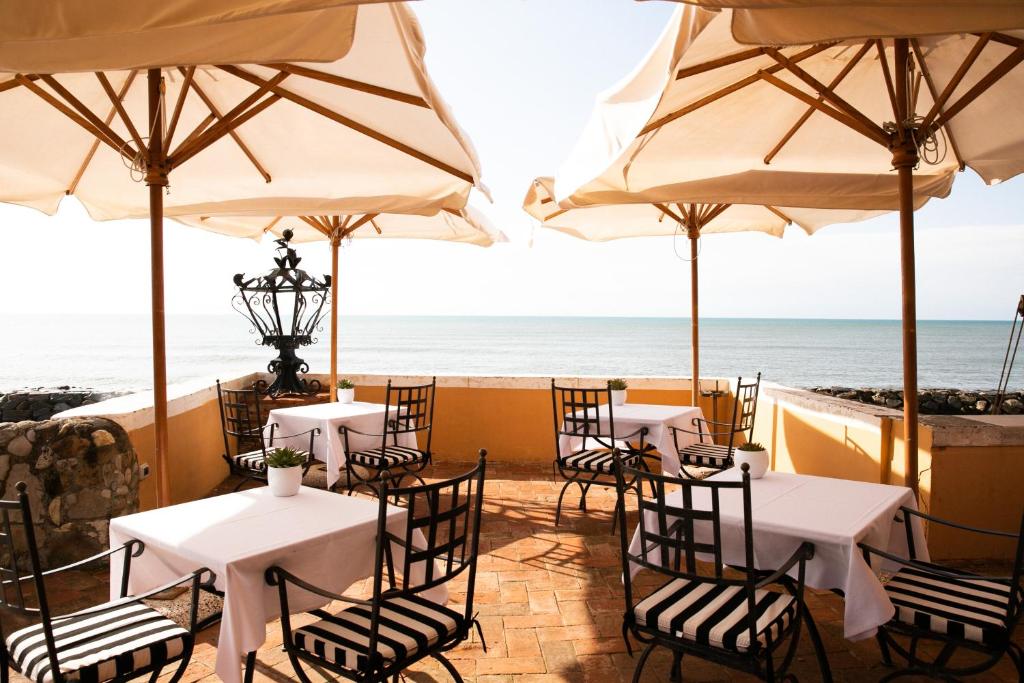
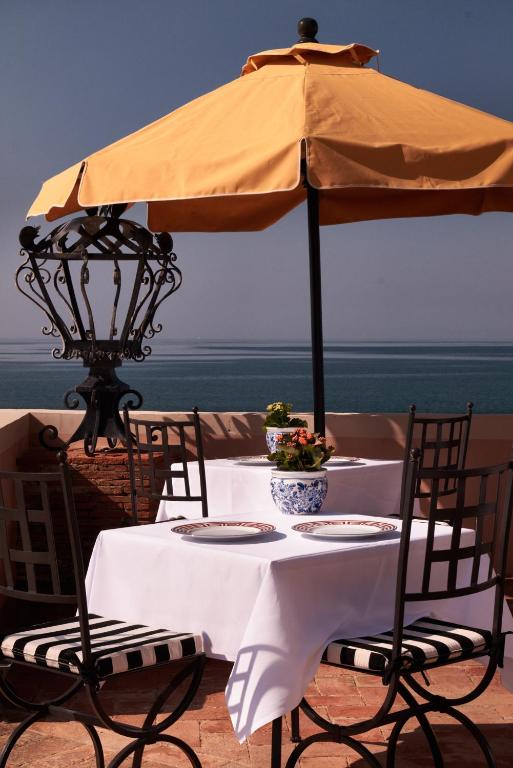
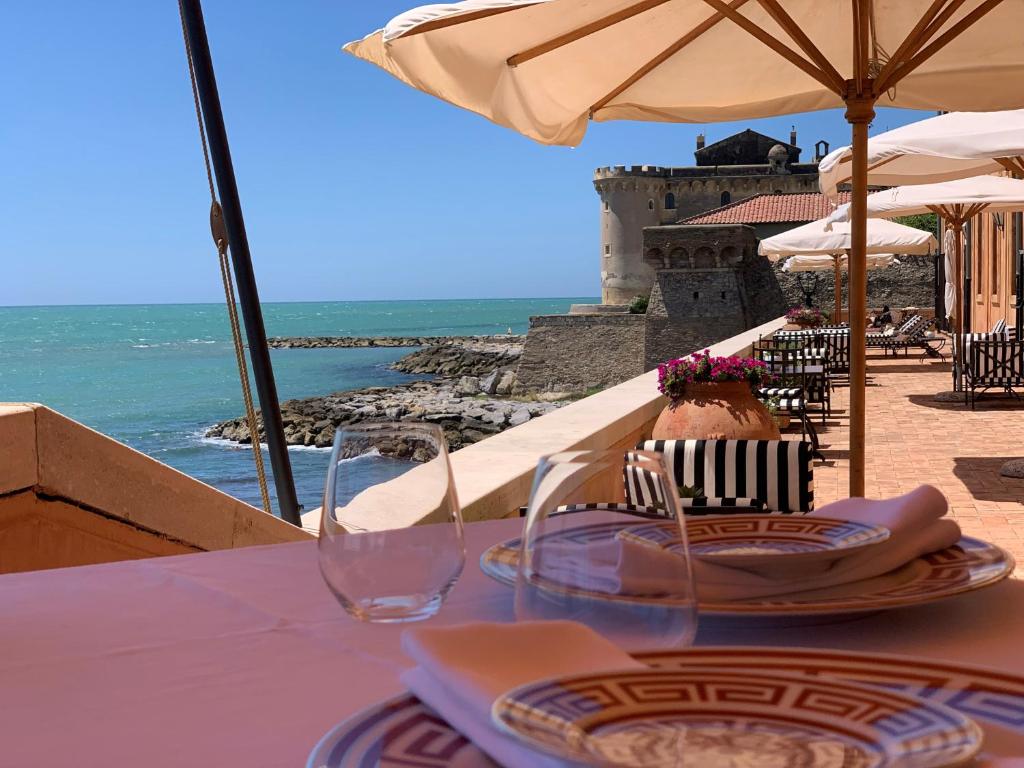
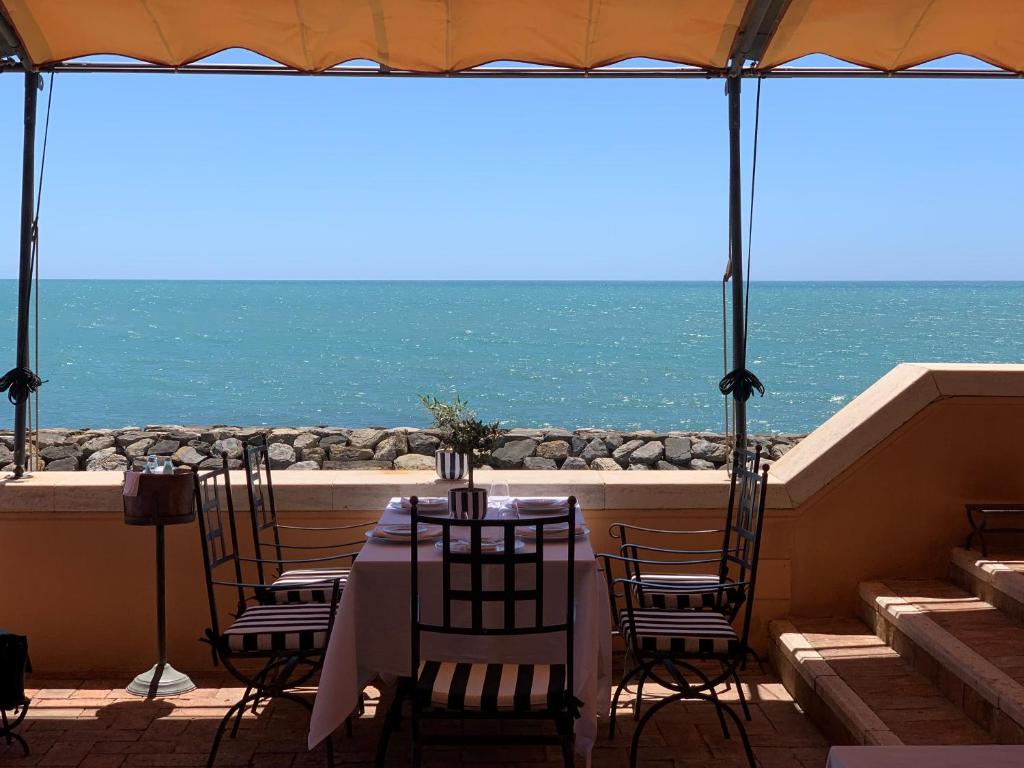
A storied Roman retreat far from the maddening crowds, La Posta Vecchia is its own inimitable universe and a true one-off in the bland age of brands. This is the second property of the Italianissimo Pellicano Hotels group and its gorgeous sea-facing terrace dotted with custard-colored umbrellas is reason enough to come. It’s also a base to explore the lesser known Lazio Alto region.
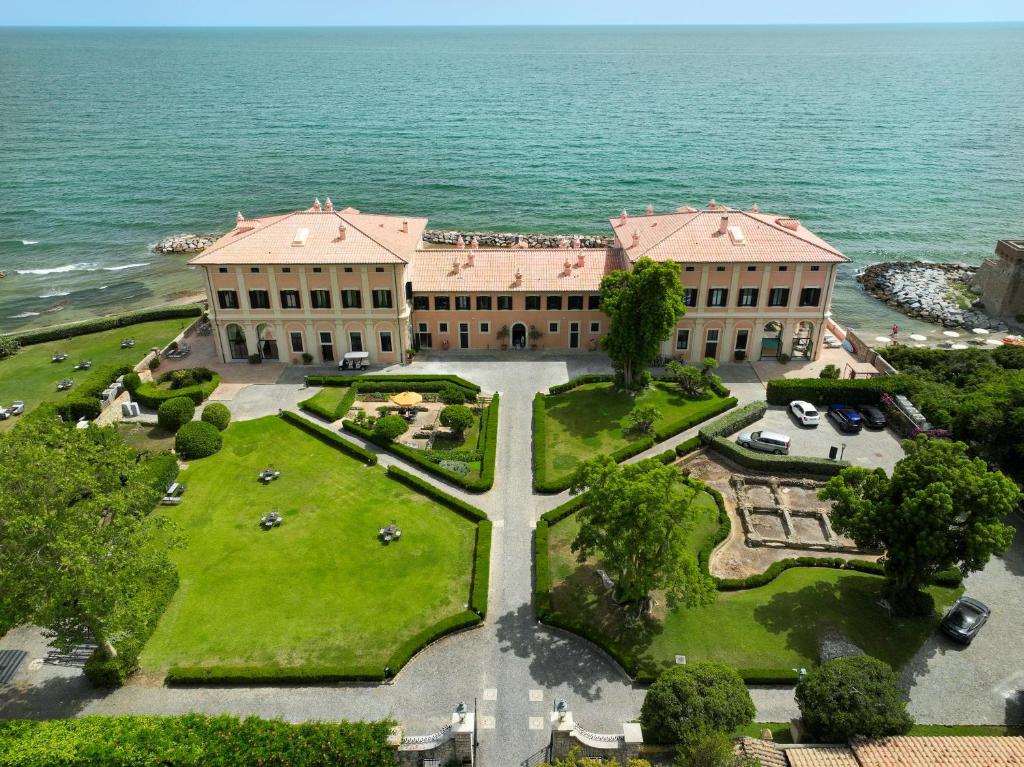
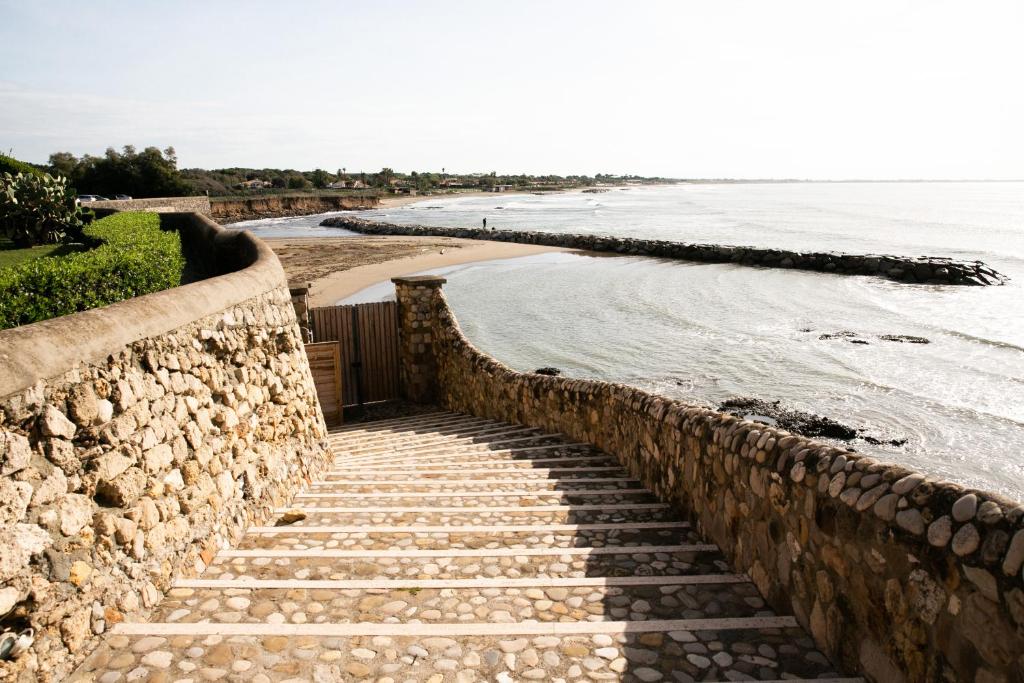
Thirty minutes and a world away from Rome, La Posta Vecchia’s stretch of coast at Palo Laziale has been a luxury seaside resort since ancient times. The imposing Renaissance mansion with a private black sand beach boasts the remains of a Roman villa in its basement, excavated by former owner American oil tycoon Jean Paul Getty whose presence lingers, as does his taste, in heavy papal velvets and ecclesiastical antiques. Today, the adjacent Palo Castle is still owned by the Odescalchi, nobles of princely rank. In keeping, La Posta Vecchia’s intimate feel is that of a friend’s family castle, full of eccentric art pieces and quirky nooks and crannies in which to get lost.
Set the scene
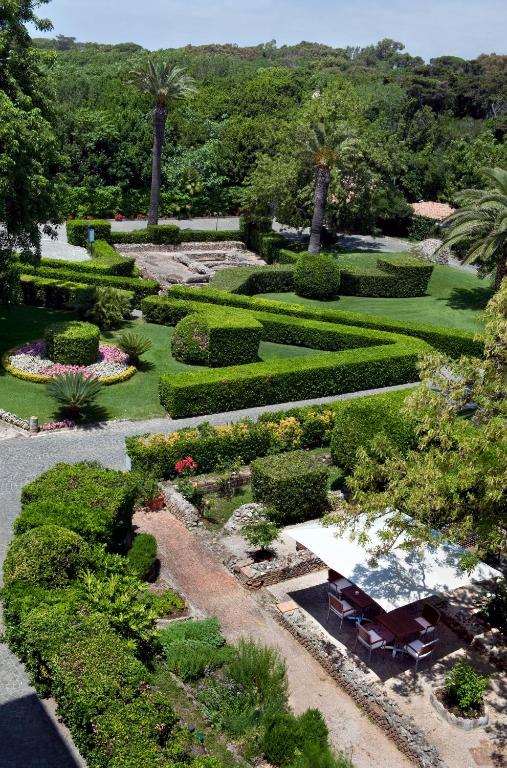
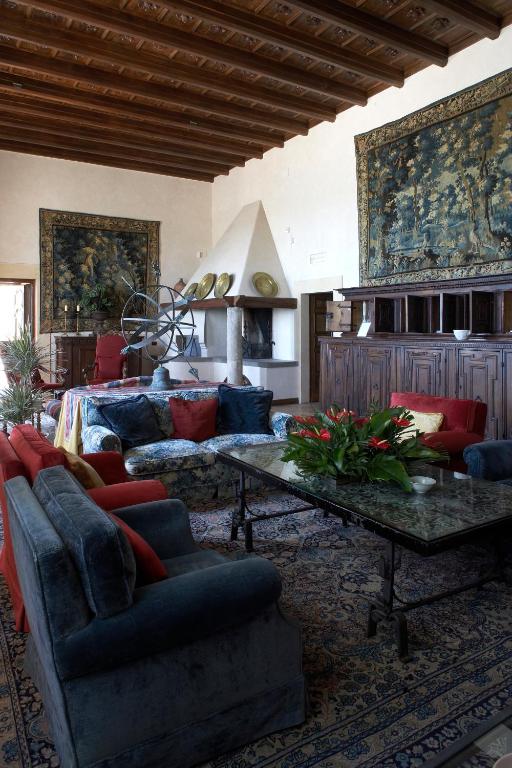
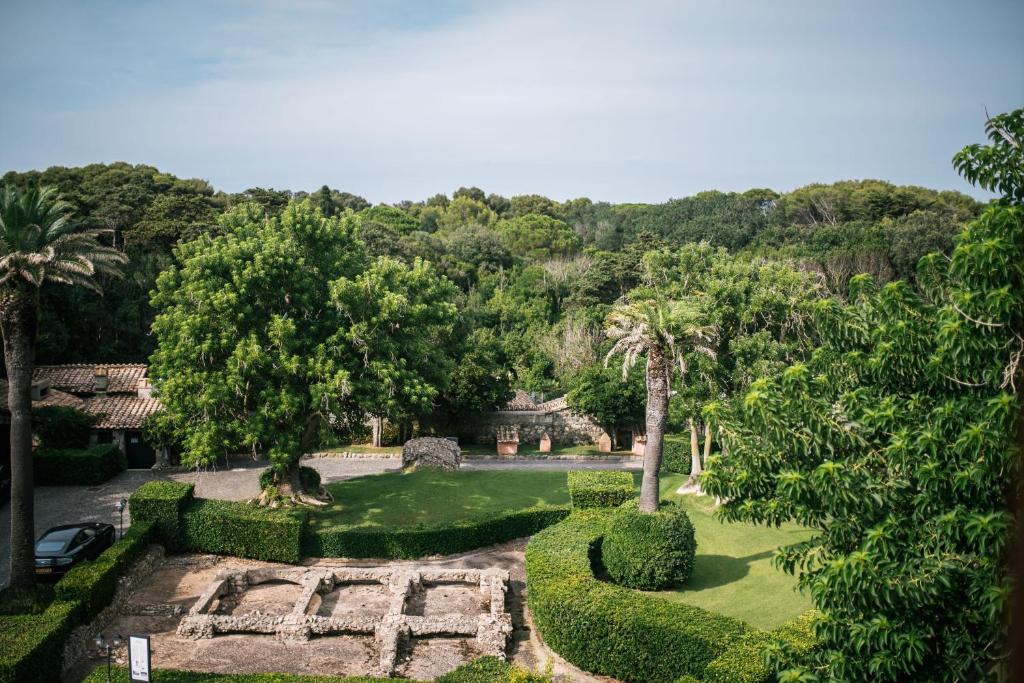
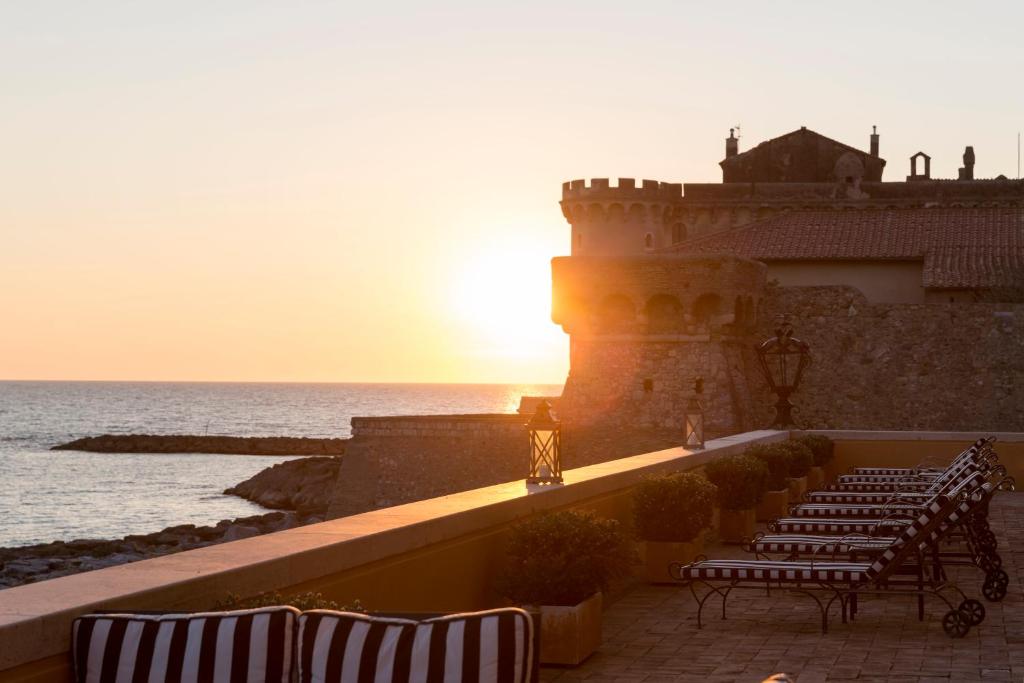
Renovated in 2023/4 with the supervision of the “Sovraintendenza, the Italian national heritage institute, and restored (after much historical research) to its original Renaissance rose exterior, La Posta Vecchia sits in seven hectares of grounds and Italianate gardens cooled by a rosemary-scented sea breeze and delineated by the walls of a Roman villa just in front of the black sands of Ladispoli’s beach. It is 22 miles northwest of Rome and only 30 minutes from Fiumicino airport, in a sheltered bay which creates its own microclimate. All day the sun drenches the lateral terrace overlooking the inky Tyrrhenian, laid with Pellicano’s trademark yellow striped towels on rows of sun loungers, before setting over Palo Castle, once the home of the Orsini dynasty. The mansion itself was originally constructed in 1640 to accommodate the overflow of guests to their hunting parties; the porticos on the eastern and westerly wings were once stable doors. Heavy tapestries of woodland scenes hang on walls in the public spaces. The building eventually became a customs and post house for the Papal States. The Orsinis counted five Popes among their kin.
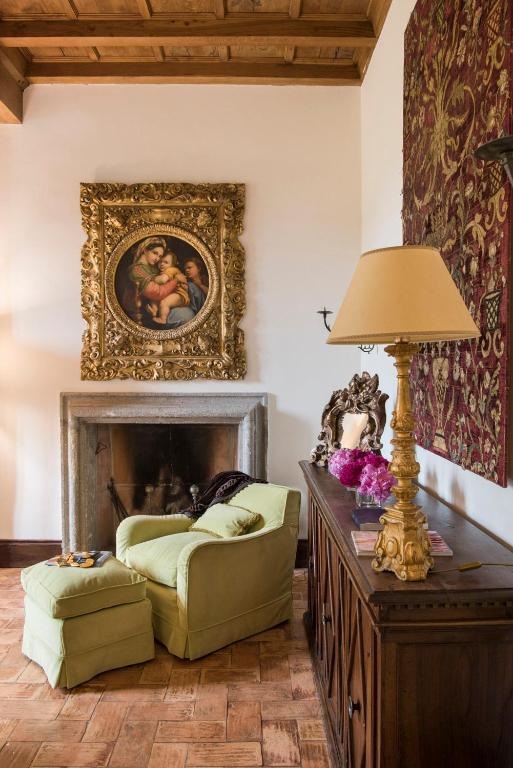
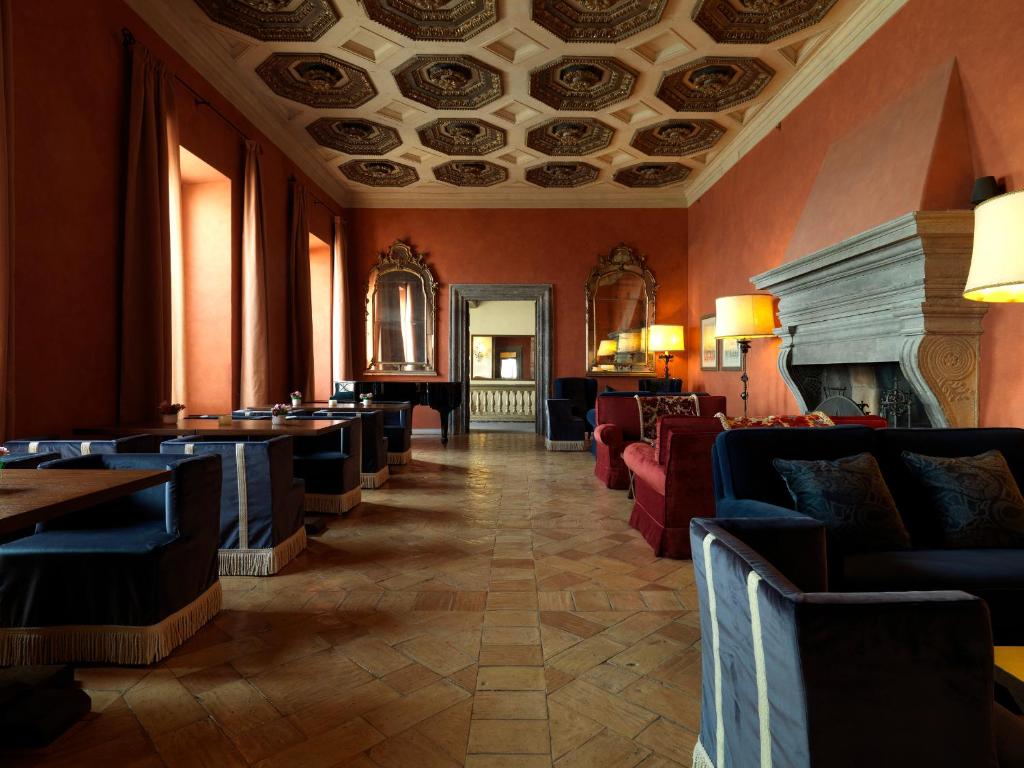
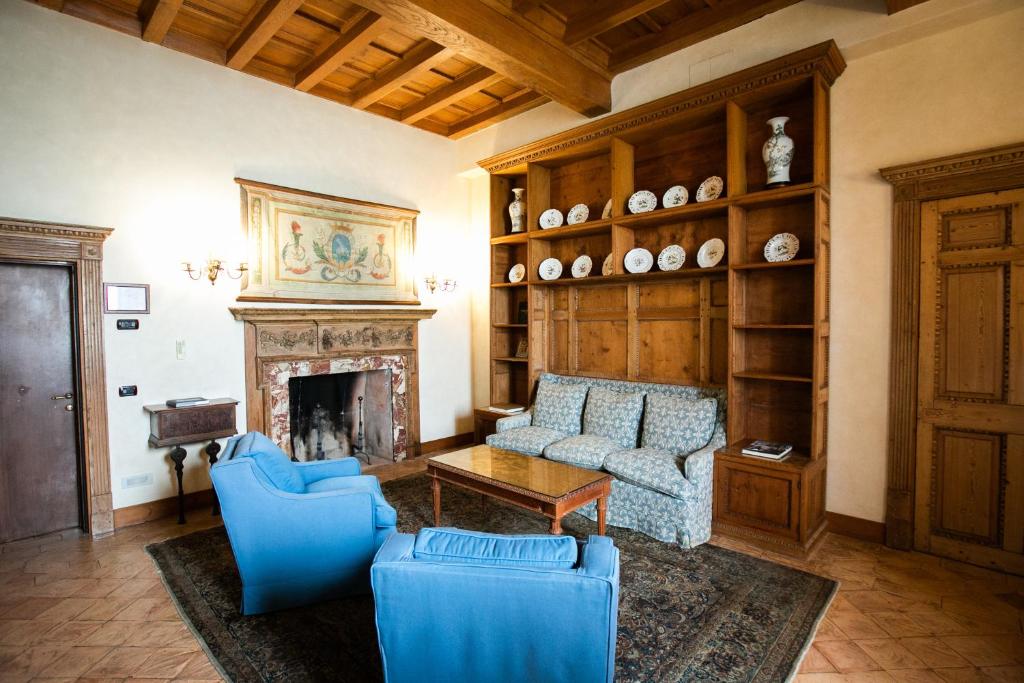
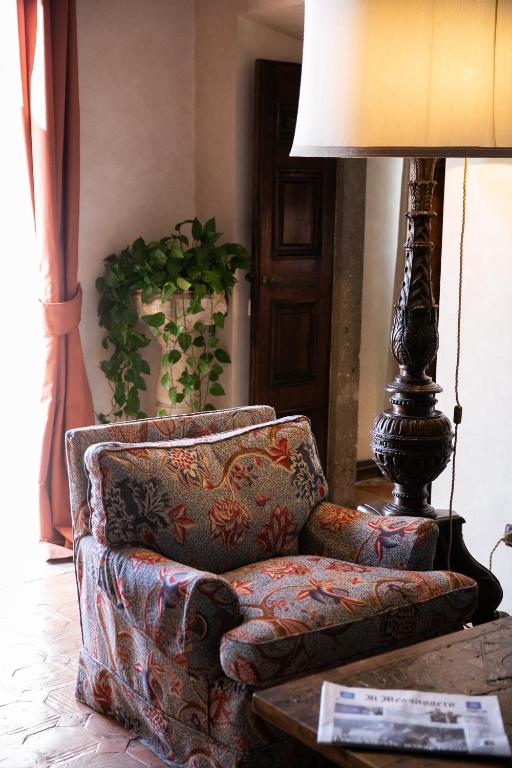
When John Paul Getty bought and restored the place in 1960, he hired famous Italian art historian Federico Zeri to fill it with appropriately weighty art and ecclesiastical pieces sourced from the Italian Renaissance onwards. After all, Getty considered himself as powerful as a Pope and he might well have been. He was once the richest man in the world. Very little has changed since his day, bar the geometric Chalice Vases ( reissues of the 1962 design for Bitossi by Ettore Sottsass) and the Italian road trip themed Monopoly issued by Pellicano Hotel’s young CEO Marie- Louise Scio’s ISSIMO, an online journal and shop which celebrates all things Italian. Furniture includes church prie-dieu (kneelers), sacristy wardrobes, throne-like cardinal’s chairs and gilded triangular altar lanterns as well as a collection of marble inlaid coffee tables in mottled creams, greens and reds. To set the imperious tone, guests are greeted in reception by two marble and stone busts of Roman emperor Vespasian and general Marcus Agrippa. Elsewhere hang antique maps of Rome and paintings by 17th century Rome-based Dutch topographical painter Gaspare Vanvitelli. It’s as if John Paul Getty still roams the place, striding the polenta-colored upstairs corridors, seated in his studio (now the drawing room and library), swimming breast stroke in his indoor stone pool shaped like a baptismal font, or admiring the Roman mosaics in his basement.
The backstory
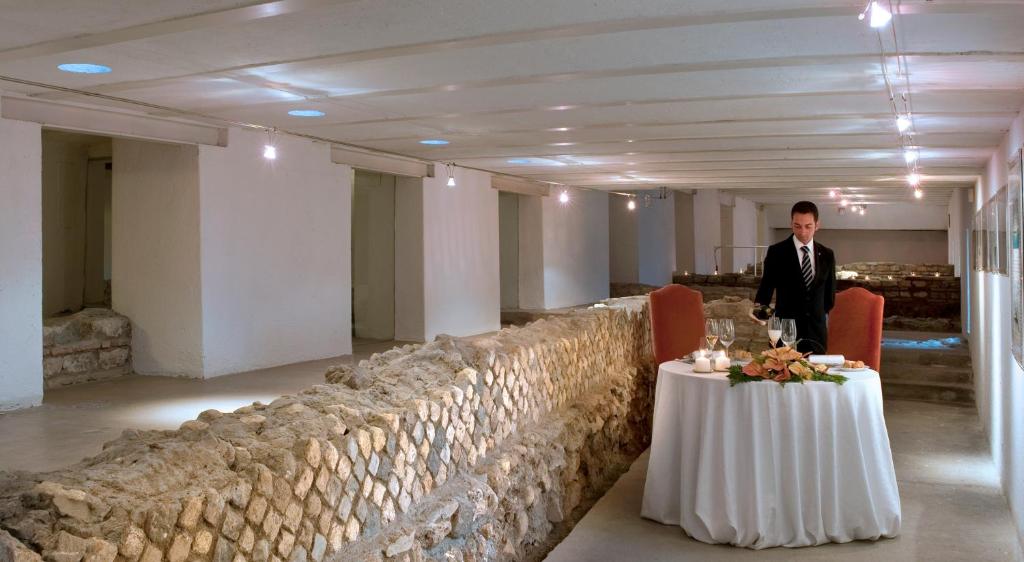
La Posta Vecchia is testament to the Sciò family’s deep-seated respect for art and the past. For to stay here really is to walk on Roman history. Present-day Palo is seated atop of Roman port and seaside resort Alisum where Emperor Marcus Aurelius himself kept a villa. The remains of a vast Roman summer house dating back to the 2nd century BC, unearthed by Getty along with African and Greek marbles and amphorae, have been kept as private museum in the basement which guests are free to stroll unaccompanied. It was through socializing with 20th century Roman nobility at Palo castle that John Paul Getty found and bought the mansion, destroyed by fire in 1918, from the Odescalchi in 1960, restoring the place to its former glory and keeping it until his death in 1976, three years after the infamous kidnapping of his grandson John Paul Getty III. In 1980, property mogul and hotelier Roberto Sciò purchased the mansion from the Getty heirs complete with J. Paul Getty’s entire art and furniture collection (which might have otherwise been dissembled or transported to The Getty Villa in Los Angeles) living in it, almost untouched, as a family home for a decade before, in 1990, opening it as his second hotel after Tuscany’s Il Pellicano. Most recently, between 2022 and 2024, Marie-Louise Sciò oversaw renovations hand in hand with the Sovraintendenza which included the restoration of Roman mosaics as well the palazzo’s exterior. As a witty nod to the noble milieu and the Sciò family’s former residency, a family tree of portraits by Gucci collaborator Ignasi Monreal, hangs in the piano room outside of the restaurant.
The rooms
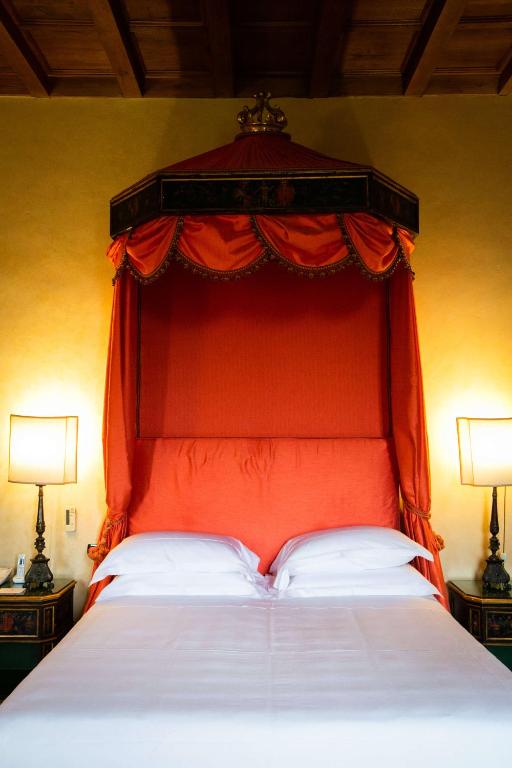
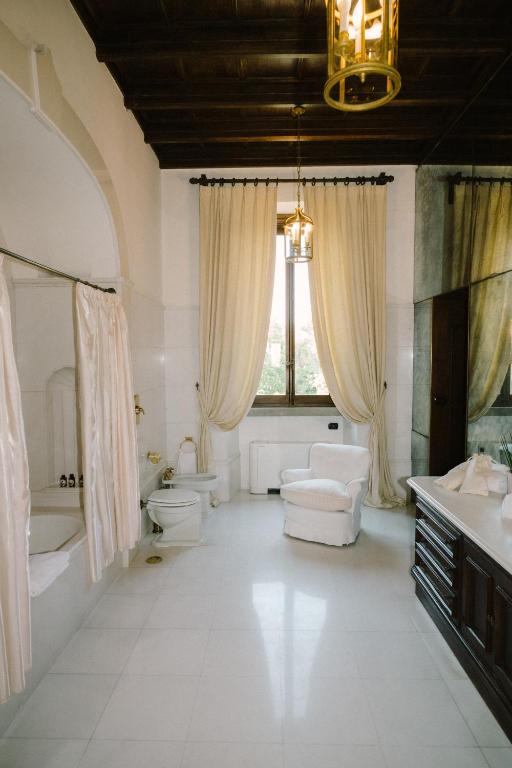
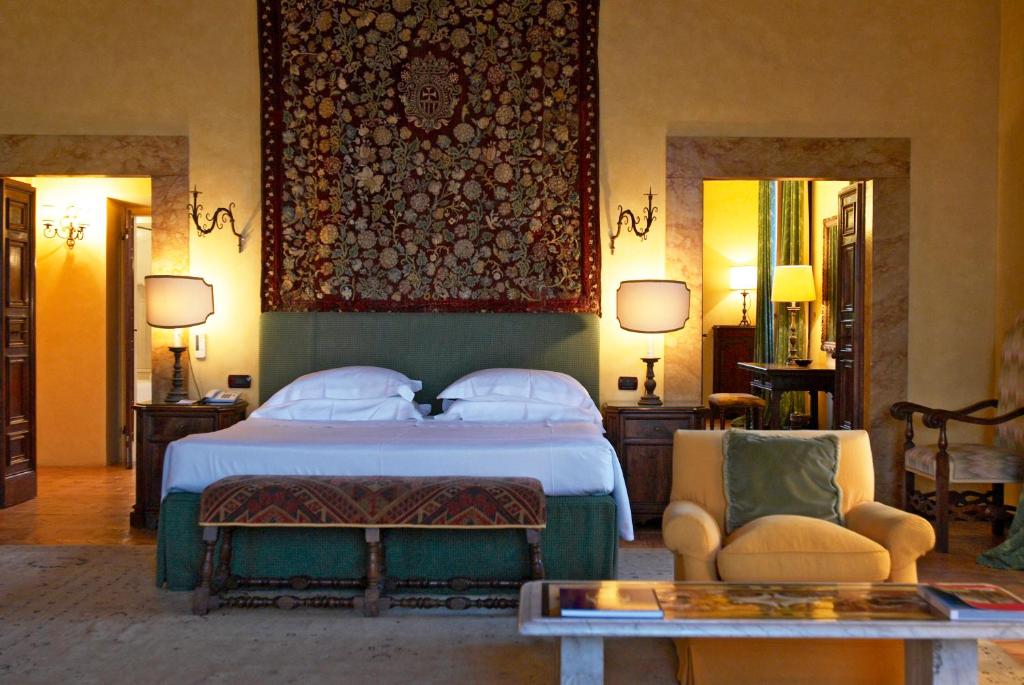
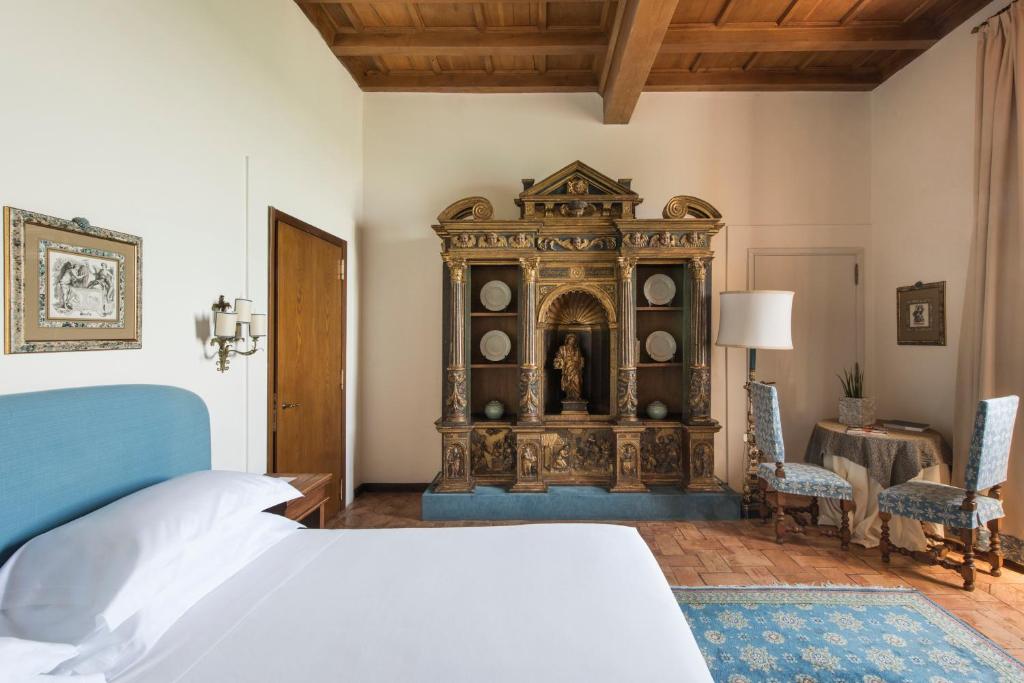
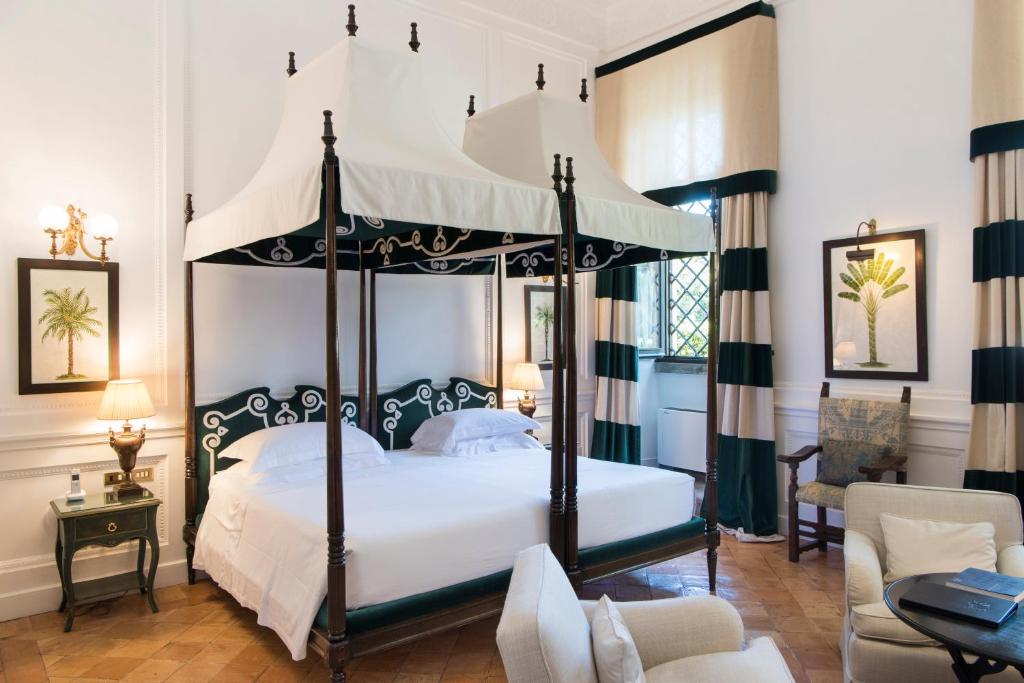
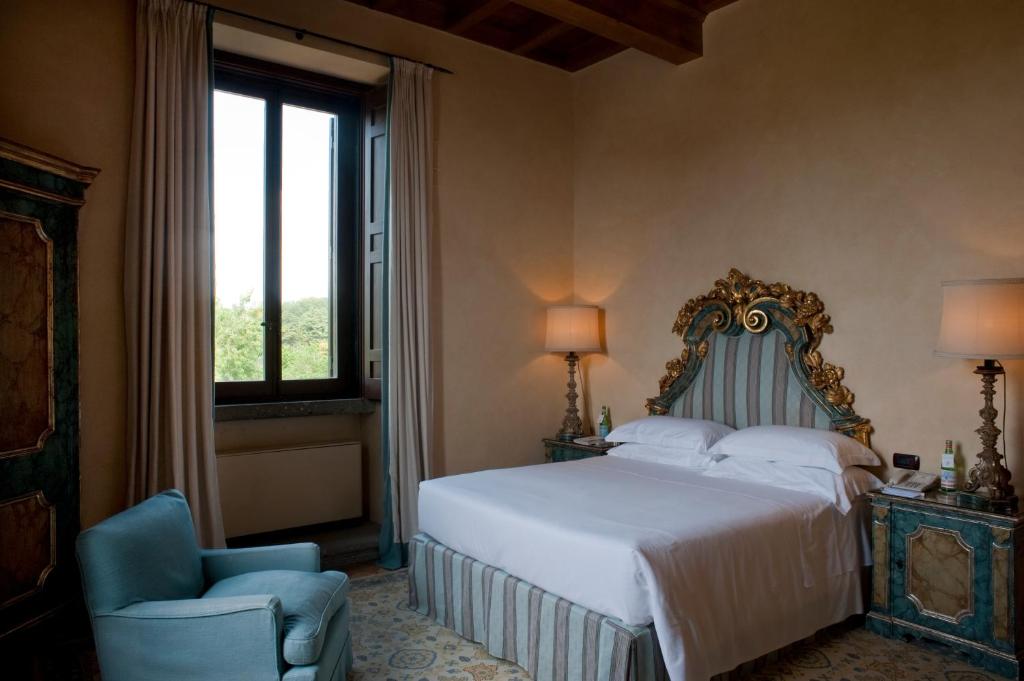
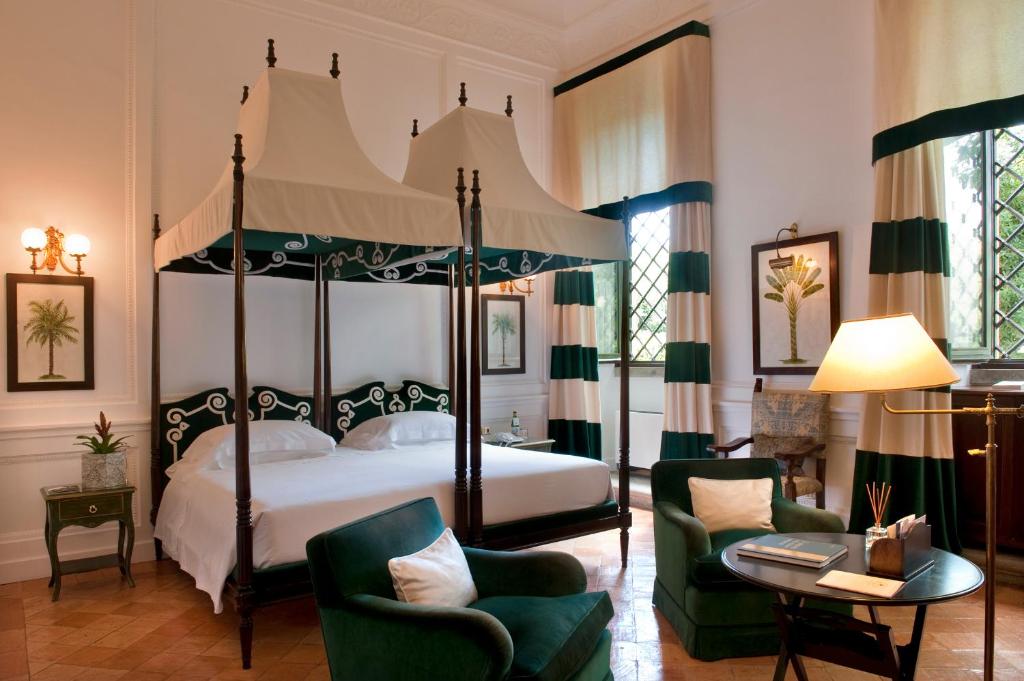
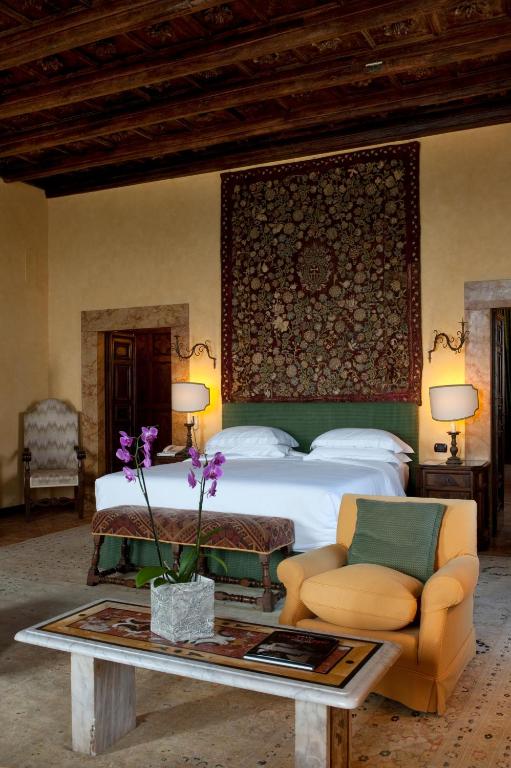
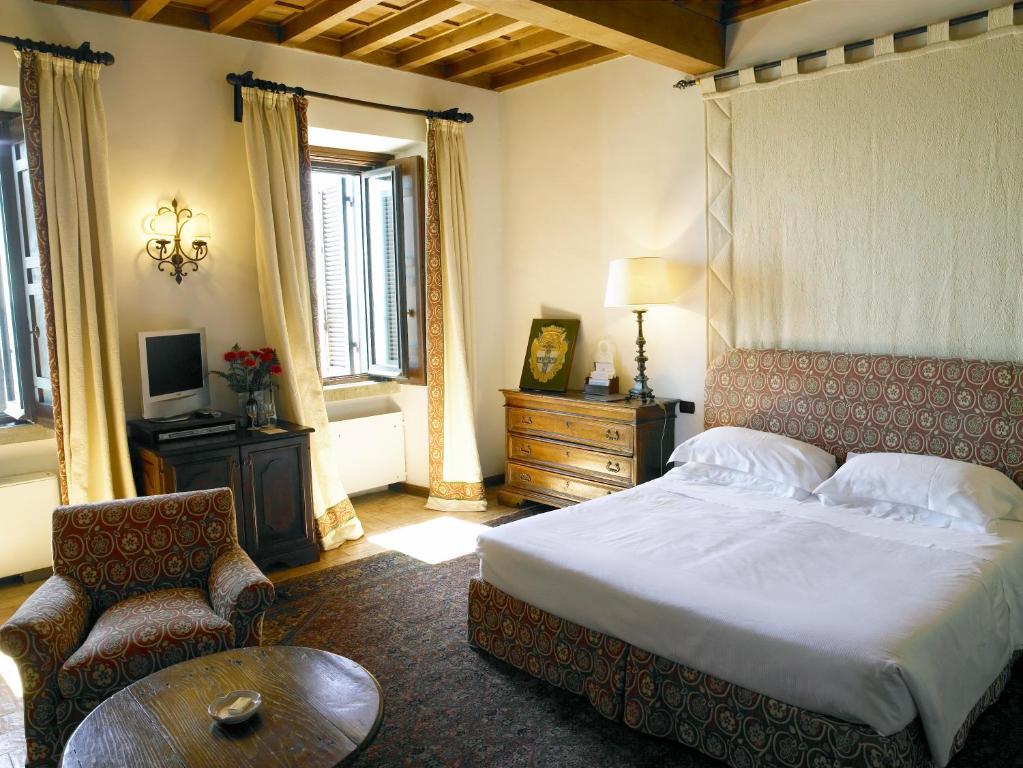
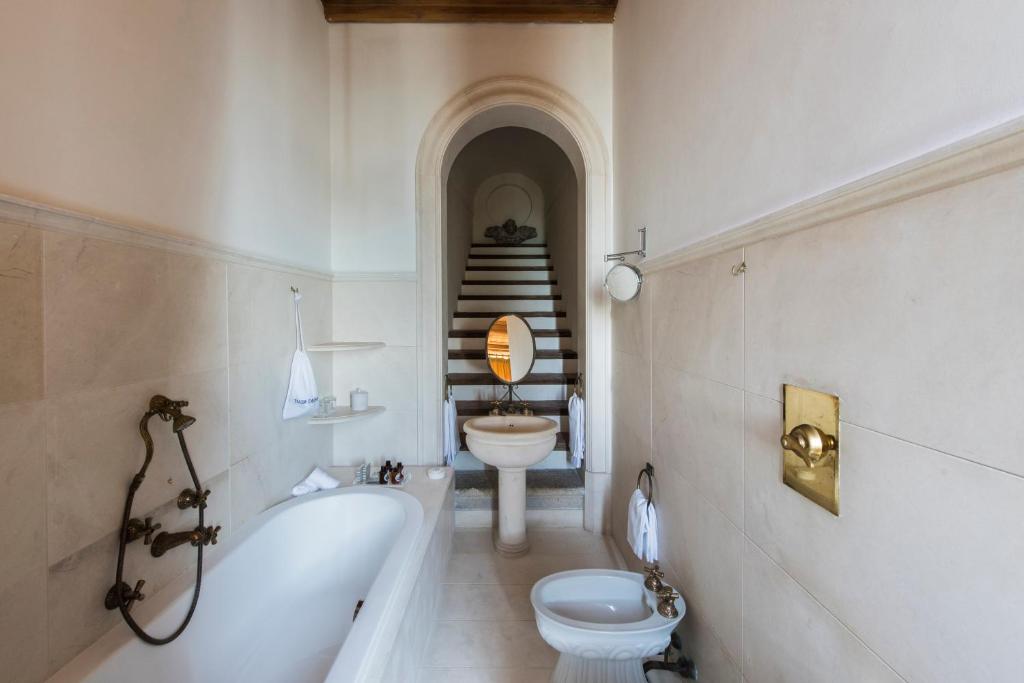
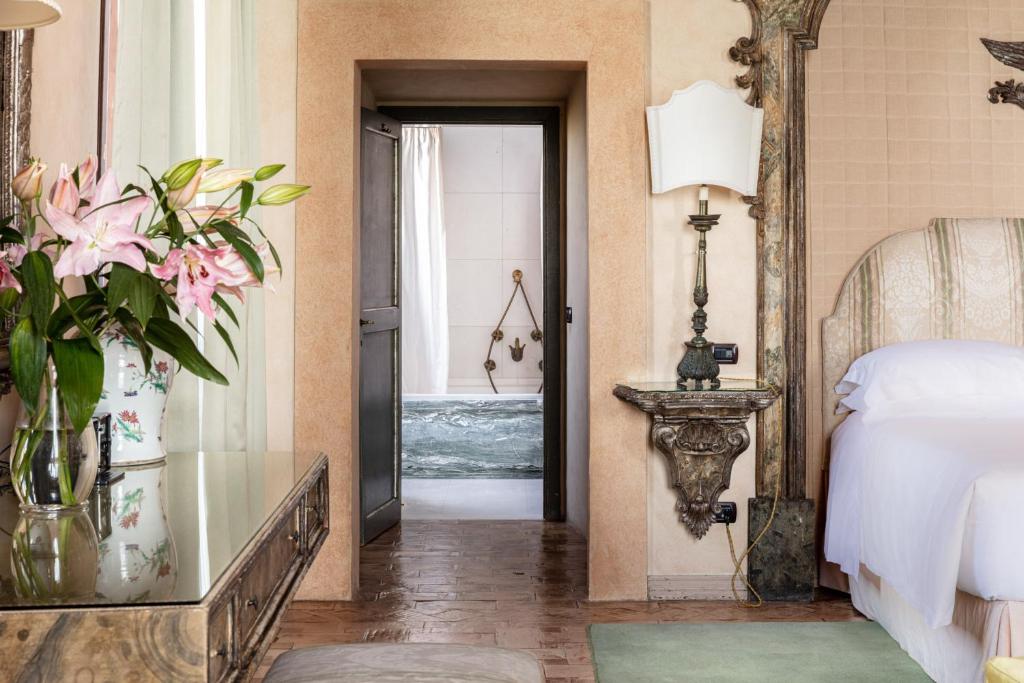
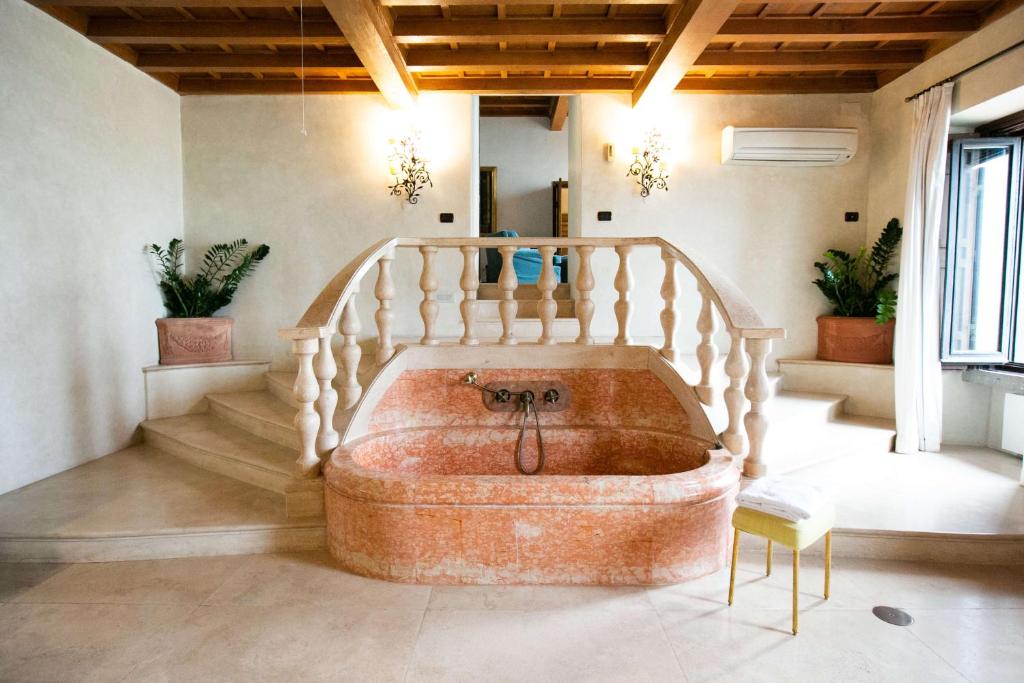
La Posta Vecchia’s 21 rooms and suites set over over three floors, and somehow reached by a labyrinth of stone stairs and corridors which echo like inner ears with the sound of footsteps and the waves, all bear original stone fire places, high ceilings, grand bedheads, heavy ruched silk curtains, sacristy furniture, ghostly burnished mirrors, cardinal reds and their own shape, style and idiosyncrasies as well as former residents. The Getty Suite speaks for itself with its throne-like chairs, opulent tapestries, carved rose wooden ceiling and connecting door into the Medici Suite (CH) where Getty put up some of his mistresses. By the age of 61, and already divorced five times, he had compiled a list of 100 of his favorite lovers. It feels like grand romances should abound here. Rooms face either the park or the sea. With the windows open, the indigo below like an infinite castle moat, one could be standing on the bow of a ship, face in the wind. Bathrooms are equally whimsical. The Castello Suite has a green marble clam shaped sink with carved lions feet in the bathroom. It might be like sleeping in a museum. But to all this tastemaker Marie-Louise brings fresh air in the form of the best of contemporary Italy’s most unstuffy lifestyle brands with bathroom products stocked by her ISSIMO online shop and a new Florentine Frette sheet collaboration.
Food and drink
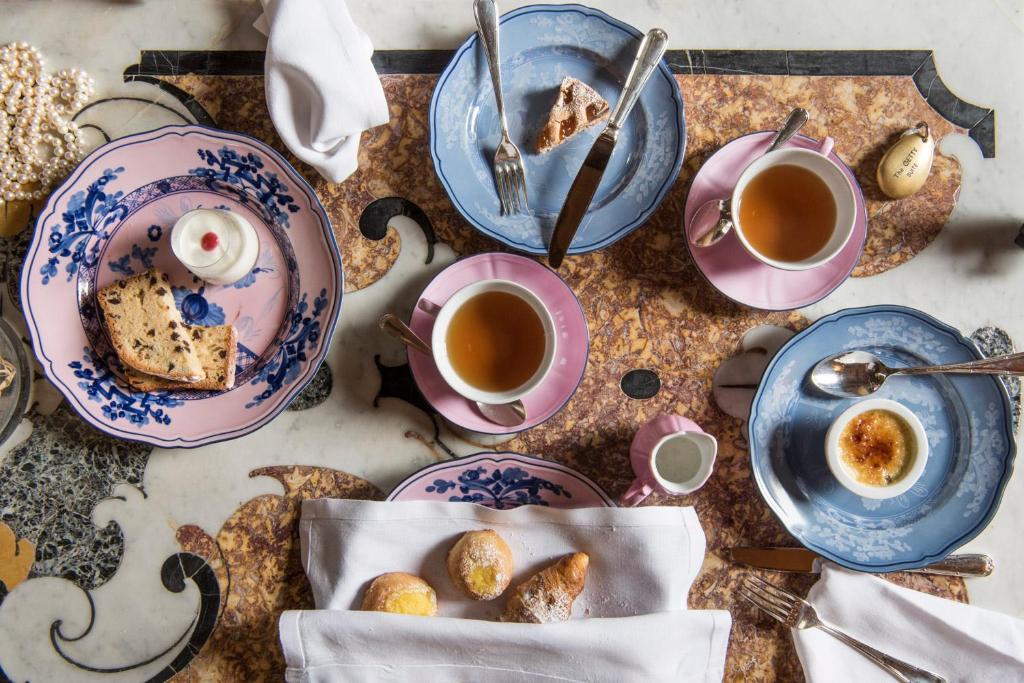
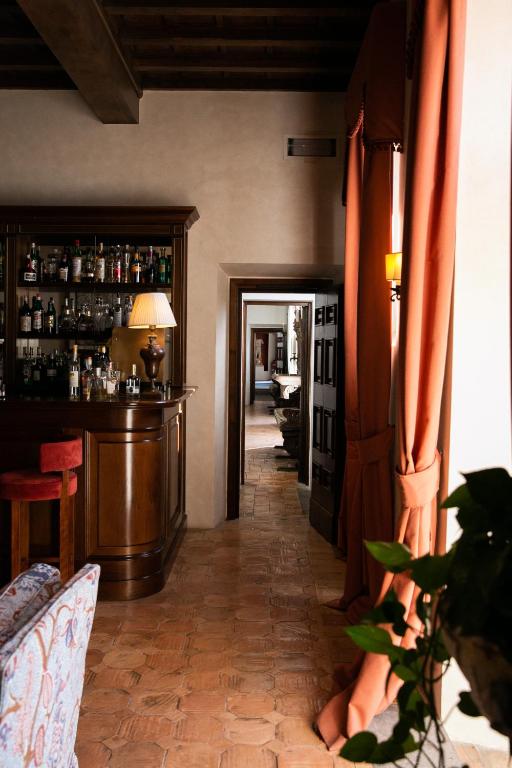
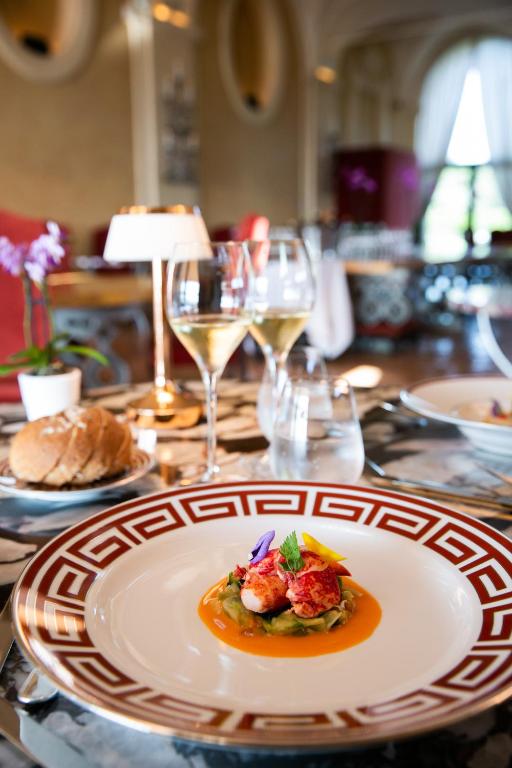
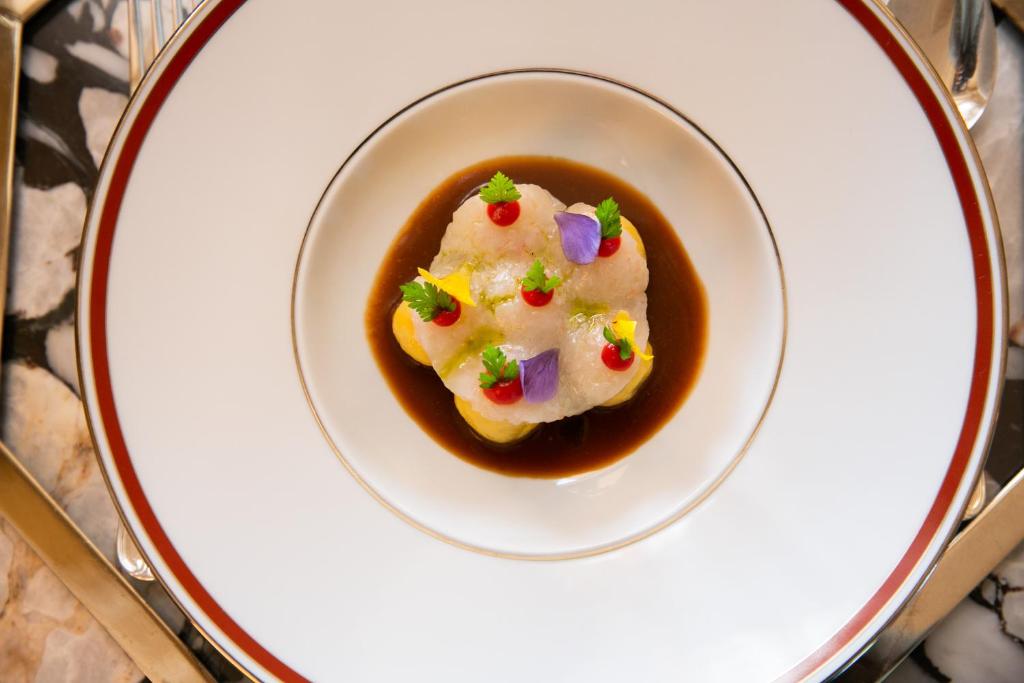
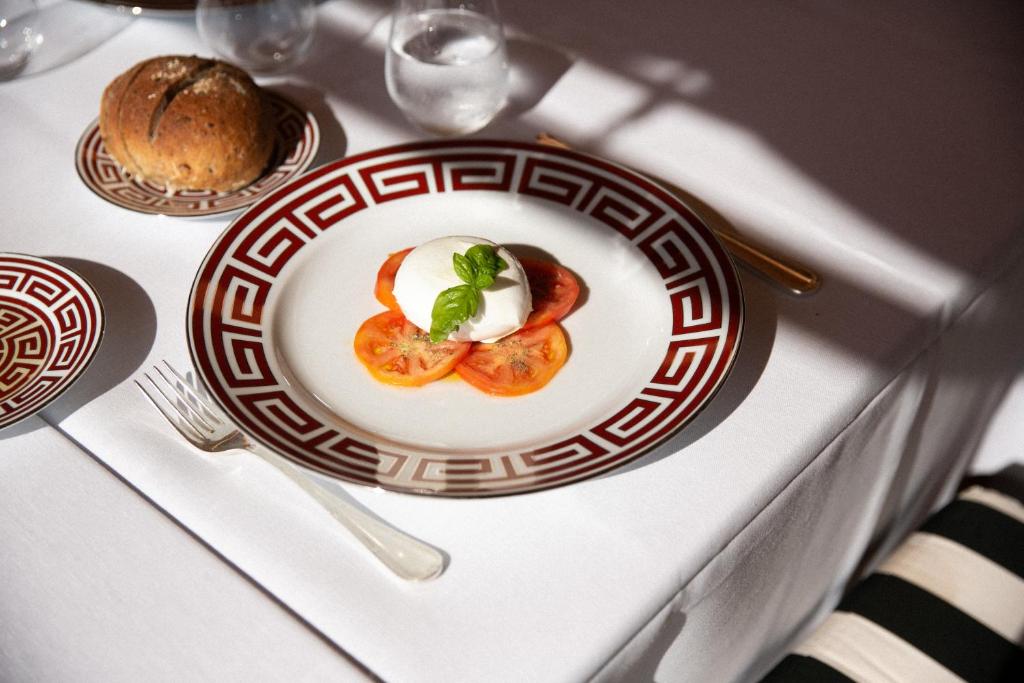
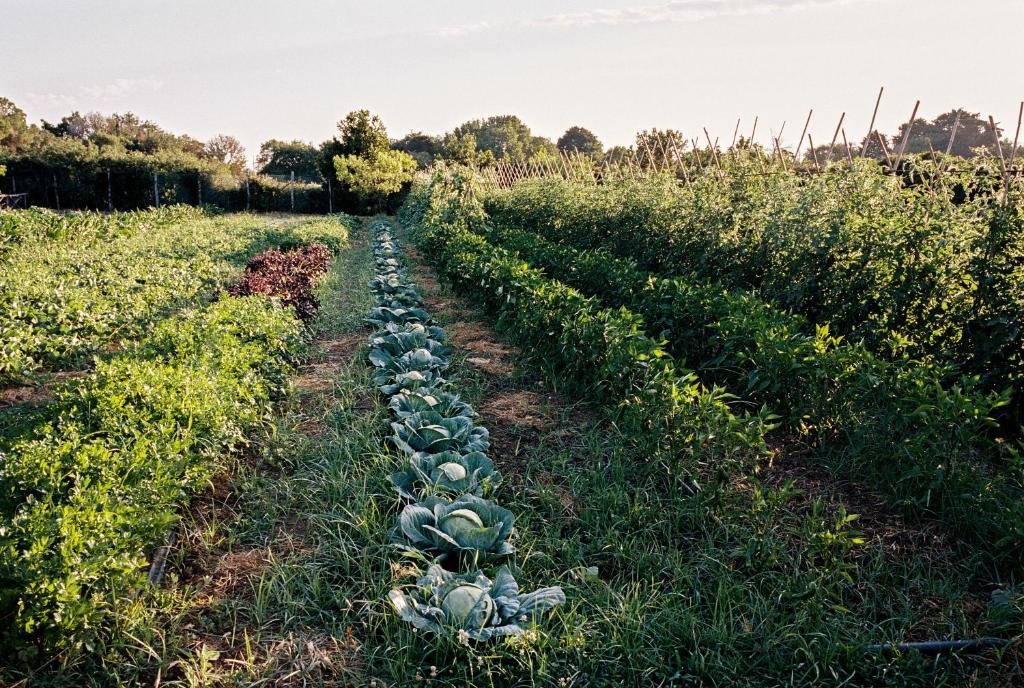
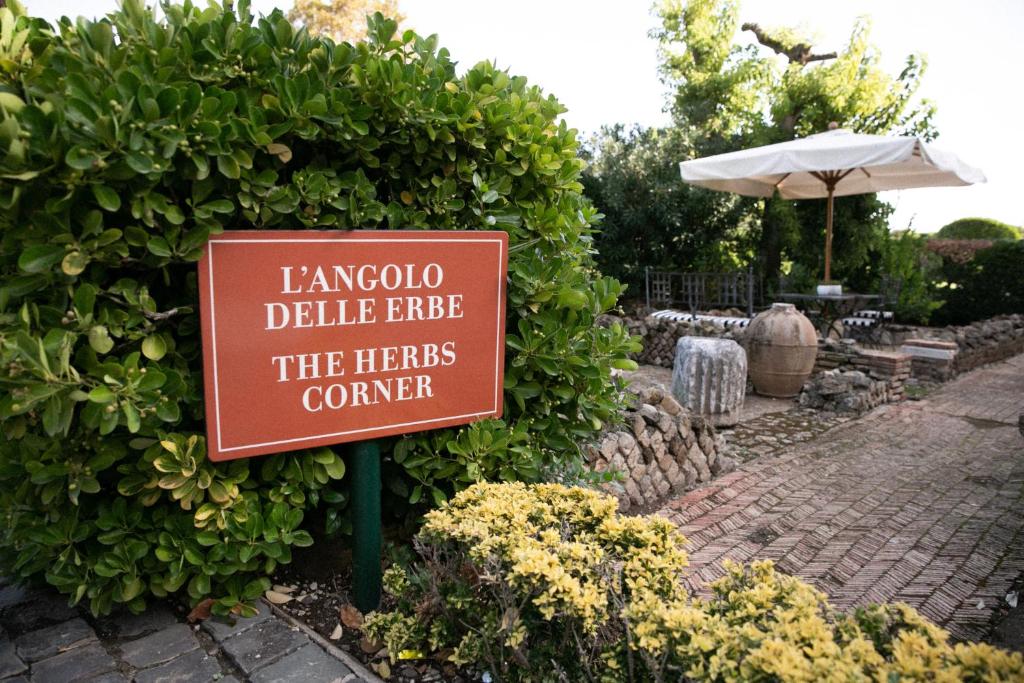
During a year’s closure for renovations, La Posta Vecchia’s Executive Chef Antonio Magliulo spent his time researching antique Roman recipes made with sustainable local produce that now spearhead the new menu in the Cesar restaurant, a glamorous light-filled space with orchid-dashed circular tables in tiramisu-like marble and paprika-coloured velvet chairs. The old porticos were opened up and made into glass doors during recent renovation renovations. The night sky is mirrored in Villeroy & Boch gold-starred blue porcelain plates. Guests can choose from three menus: Rome, Sea, or Garden (with ingredients sourced from La Posta Vecchia’s allotments and herb gardens). The former includes oysters (once farmed by the Romans here) served with wild Roman mint as well as dishes using chickpeas, spelt and Garum fish sauces. The locally grown Romanesco artichoke is also a star when is season—Ladispoli hosts the Sagra del Carciofo festival each April. “Sea" features the likes of whole roasted, fresh line-caught sea bass from nearby Civitavecchia. Bar cocktails use herbs from the garden. Silverware is Brogi and breakfasts are served on the terrace on macaroon-pink plates by Gucci-owned "Ginori 1735” formerly known as Richard Ginori.
The spa
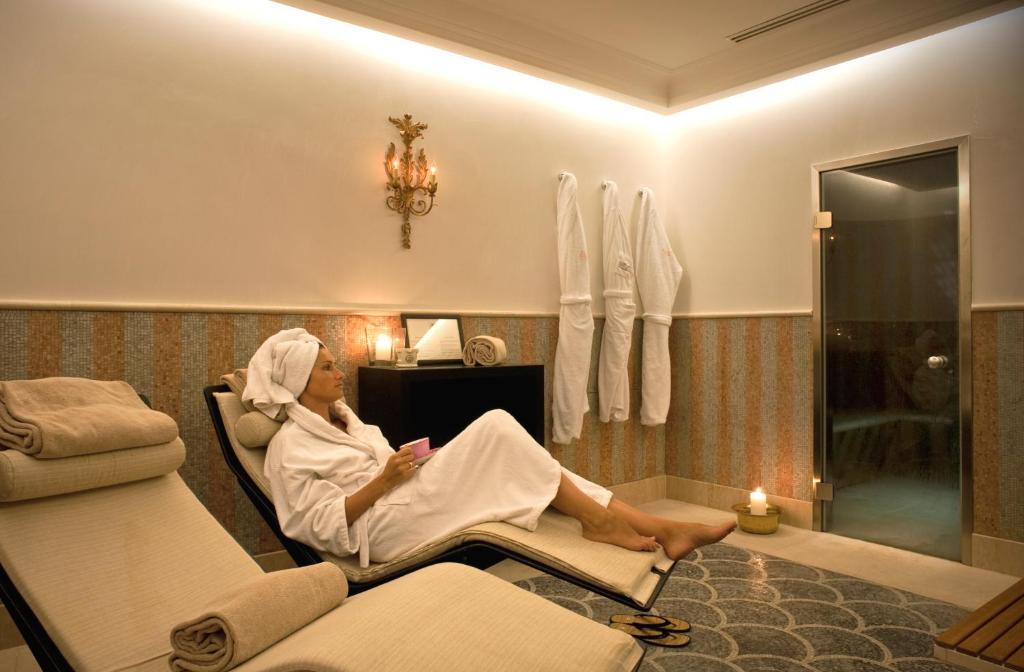
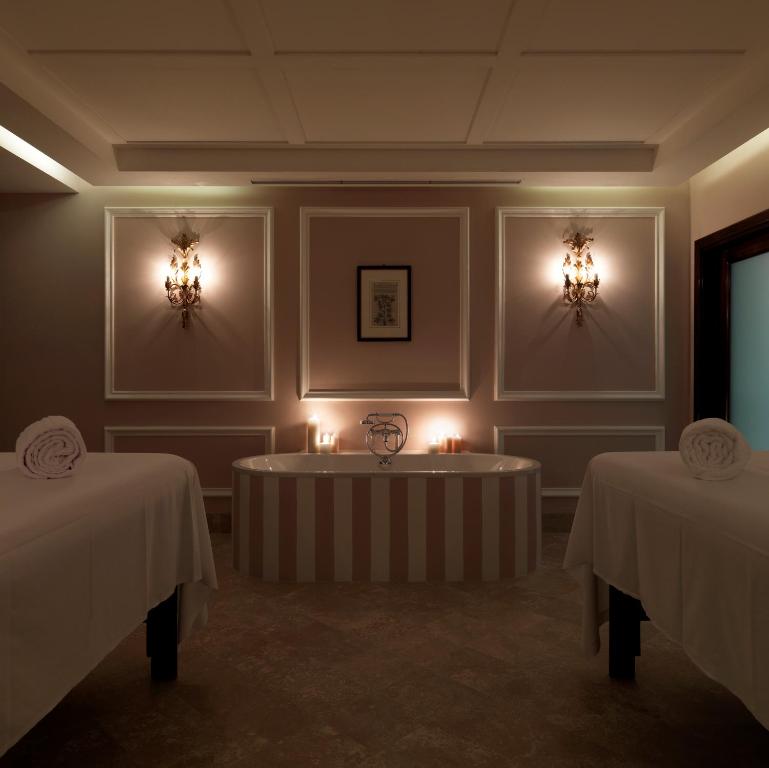
In addition to Getty’s indoor stone swimming pool which overlooks the terrace and sea, there is a small spa housing a Turkish bath which uses products from Florence’s lauded Santa Maria Novella pharmacy, available to hotel guests and visitors with a day pass. Meanwhile the hotel boutique stocks the best of ISSIMO’s brands from LabSolue body lotion (also in rooms along with ISSIMO’s travel kits) to ISSIMO x Lido capsule collection swimsuits.
The neighborhood/area
The relatively unexplored area of Northern Lazio offers a chance to the explore the ancient Etruscan culture. It is home to two Etruscan necropolises, those of Cerveteri and Tarquinia, part of a UNESCO World heritage site as well as medieval seaside town of Santa Severa, where the Pyrgi tablets were found in 1964, pre-roman gold plaques inscribed with the ancient Etruscan and Phoenician. The hotel can arrange tours. Meanwhile closer to home, Palo Laziale’s woodland, an area of hygrophilous forest and exotic plants, is a World Wildlife Fund protected reserve. And as if that weren’t enough, a new theory suggests that Caravaggio died in Ladispoli in 1960 instead of Porto Ercole in Tuscany, having disembarked on a voyage from Naples that was to take him to Rome, in the hope of receiving an official pardon for the murder he committed in 1606.
The service
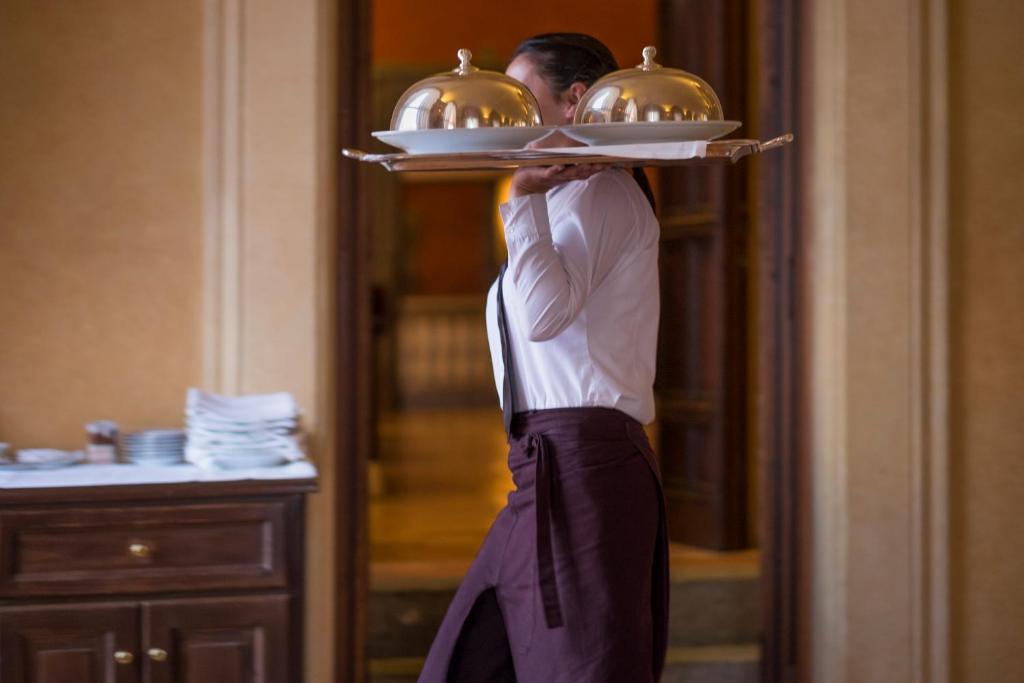
Multilingual young Italians add a touch of spryness to all the grandeur and opulence keeping things unstuffy.
Eco effort
Pellicano Hotels Group calls its public commitment to sustainability, local produce and preserving the areas and traditions where it holds hotels, Il Dolce Far Bene—roughly “living the good life means doing good things”—and it’s considered approach to travel, “honest luxury”. Here it is involved in Marevivo’s nationwide“adopt a beach” clean-up projects.
Anything left to mention?
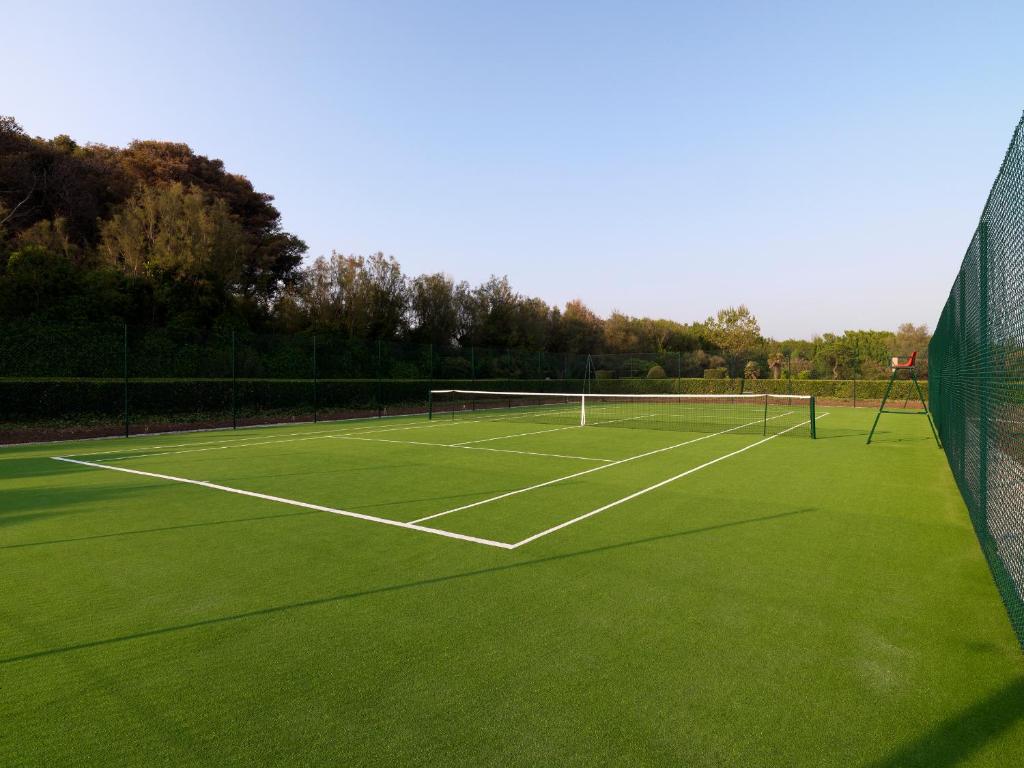
Other recent additions include a garden gym and meeting room. In 2025, a second private beach will launch. La Posta Vecchia is open from April to November every year.
Palo Laziale, Ladispoli
Italy
http://www.pellicanohotels.com/hotel/la-posta-vecchia/
+39 06-994-9501