

You’ve spent an hour scrolling through hotel listings, and you keep seeing the phrase “4-star hotel” plastered everywhere — but what does that actually mean? Is a 4-star hotel in Tokyo the same as a 4-star hotel in Budapest? Will you get a plush bathrobe and a concierge, or just a slightly nicer version of a roadside motel? If these questions have ever crossed your mind before booking a stay, you’re far from alone. Hotel star ratings are one of the travel industry’s most widely used — and most widely misunderstood — classification tools. This guide breaks down exactly what a 4-star hotel means, how the rating system works globally, and whether it’s genuinely worth your hard-earned money.

A Brief History of Hotel Star Ratings
The concept of rating hotels didn’t happen overnight. It evolved over more than a century of travel culture, hospitality standards, and consumer demand for transparency.
The roots of hotel classification trace back to the early 20th century. The American Automobile Association (AAA) began its hotel and restaurant inspection program in 1937, using a Diamond rating system rather than stars. Meanwhile, the Michelin Guide — originally designed as a motoring companion for French drivers — began incorporating hotel ratings in the early 1900s, using stars to denote quality. National tourism boards across Europe soon followed, each developing their own star-based classification systems to help travelers navigate an increasingly complex accommodation landscape.
Over time, hotel chains, travel agencies, and online booking platforms began adopting star ratings as a shorthand for quality — though the lack of a single global standard created the fragmented system travelers navigate today. What started as a helpful tool has become a labyrinth of overlapping certifications, self-assessments, and review-based scores, all wearing the same “star” label.
How Hotel Star Ratings Work: The Basics
Before diving into what a 4-star hotel specifically offers, it’s essential to understand who’s actually handing out those stars — and why it varies so dramatically from place to place.
Who Assigns Star Ratings?
Hotel star ratings are assigned by a variety of bodies, and that’s where the confusion begins. Depending on the country and context, a hotel’s star rating may come from:
- Government or national tourism boards — Many European countries (France, Germany, Italy, Spain) have official state-regulated star classification systems with mandatory inspections and defined criteria.
- Independent rating organizations — In the United States, organizations like AAA (Diamond Ratings) and Forbes Travel Guide conduct their own rigorous assessments.
- Self-declared ratings — In many markets, including parts of Asia and South America, hotels assign their own star ratings without any official oversight or third-party verification.
- Online platforms — Booking.com, Expedia, and TripAdvisor use their own algorithms combining user reviews, listed amenities, and sometimes official classifications to display star ratings.
The 1 to 5-Star Scale at a Glance
- 1-Star — Budget Basics: Clean room, a bed, and not much else. These properties focus purely on shelter at the lowest possible price point. Don’t expect a lobby lounge or even a front desk open around the clock.
- 2-Star — Economy Comfort: A step up in cleanliness and basic amenities. Expect a TV, private bathroom, and perhaps a continental breakfast. Functional, not fancy.
- 3-Star — Mid-Range Amenities: The sweet spot for budget-conscious travelers who still want comfort. Expect a fitness room, on-site dining options, room service, and more attentive staff.
- 4-Star — Upscale Experience: Elevated design, premium amenities, professional service, and a noticeably higher level of attention to detail. This is where travel becomes genuinely enjoyable rather than simply adequate.
- 5-Star — Luxury & Beyond: World-class everything. Personalized butler service, Michelin-starred restaurants, spa facilities, and an experience designed to anticipate your every need before you voice it.
What Does a 4-Star Hotel Actually Mean?
Now we get to the heart of the matter. A 4-star hotel sits firmly in the “upscale” category — a meaningful upgrade from mid-range comfort without crossing into the rarefied air of true luxury. Here’s what you can realistically expect across every dimension of your stay.
Official Definition and General Standards
While there’s no single universal definition, most official rating bodies agree that a 4-star hotel must deliver a consistently superior level of service, facilities, and comfort. In the UK, for example, Visit England defines 4-star hotels as offering “excellent quality accommodation and services across all areas.” France’s Atout France classification requires 4-star properties to meet over 200 specific criteria covering everything from room size to language capabilities of staff. In the United States, a AAA Four Diamond property is expected to demonstrate “refined appointments, service, and exceptional standards throughout.”
The common thread: at 4 stars, mediocrity simply isn’t acceptable. Every touchpoint — from check-in to checkout — should feel polished and purposeful.
Physical Facilities and Room Quality
Walk into a genuine 4-star room and the difference from a 3-star is immediately visible. Rooms are typically more spacious, with higher ceilings and thoughtful interior design rather than generic furniture. You can generally expect:
- Larger room dimensions (typically 300–450 sq ft for a standard room)
- Premium bedding — high thread count linens, multiple pillow options, and a quality mattress
- A minibar stocked with drinks and snacks
- A flat-screen TV with streaming capabilities or an extensive channel selection
- High-speed WiFi (typically complimentary or included in a resort fee)
- A well-equipped work desk with proper lighting
- In-room safe, hairdryer, iron, and luggage rack as standard
- Climate control (individual thermostat)
The bathroom at a 4-star property deserves special mention. Expect a bathtub and a separate shower (or at minimum, a large walk-in shower), quality brand-name toiletries (think Molton Brown, L’Occitane, or equivalent), thick bathrobes, and proper bathroom ventilation. The days of paper-thin towels end at the 4-star threshold.
Services and Staff
This is arguably where 4-star hotels earn their rating most visibly. The service quality gap between a 3-star and 4-star property is significant:
- 24/7 front desk: A staffed reception desk at all hours, with multilingual capability at many properties
- Concierge service: A dedicated concierge (or at minimum, concierge-capable front desk staff) who can arrange restaurant reservations, tours, and transportation
- Valet parking: Available at most urban 4-star hotels, often for an additional fee
- Luggage assistance: Bellhop service at check-in and checkout
- Turndown service: Evening room preparation with chocolates, fresh towels, and bedding turned down
- Staff training: Personnel are trained in hospitality etiquette, problem resolution, and proactive guest satisfaction
The key distinction: at a 4-star hotel, staff are expected to anticipate needs, not just respond to them. If you mention you’re celebrating an anniversary at check-in, don’t be surprised to find a small complimentary treat in your room.
Dining and Food Options
A 4-star hotel almost always has at least one on-site restaurant operating to a notably higher standard than a hotel café or basic buffet. Expect:
- A full-service restaurant with a curated menu, professional waitstaff, and a proper wine list
- Room service available for extended hours (many 4-star properties offer 24-hour room service)
- A dedicated bar or lounge area with a cocktail menu
- Breakfast service that goes beyond a grab-and-go spread — think made-to-order eggs, artisan pastries, and fresh fruit stations
Food quality matters at this level. A 4-star hotel’s restaurant should be competitive with standalone mid-to-upscale restaurants in the same city — not a fallback option for guests who can’t be bothered to go out.
Common Amenities and Facilities
Beyond the room, 4-star hotels distinguish themselves through their common facilities:
- Fitness center: A well-equipped gym with modern cardio and weight equipment, not a room with two treadmills and a cracked mirror
- Swimming pool: Increasingly standard at 4-star properties, especially resort-style hotels; heated indoor or outdoor pools are common
- Spa: Many 4-star hotels offer spa facilities or at minimum, massage and treatment services
- Business center: Printing, scanning, and meeting room access for business travelers
- Event spaces: Meeting rooms and banquet facilities for corporate events and social gatherings
- Location: 4-star hotels are typically positioned in desirable, accessible locations — city centers, near airports, or in scenic resort areas
Overall Guest Experience
Staying at a true 4-star hotel should feel effortless. The friction points that characterize lower-tier stays — the front desk that can’t find your reservation, the WiFi that drops every hour, the shower with unpredictable temperature — are conspicuously absent. Everything works, everything looks good, and when something does go wrong (as it occasionally will anywhere), staff are empowered and trained to fix it quickly and graciously.
There’s a meaningful level of personalization at the 4-star level. Your preferences are noted, your requests are remembered, and the experience feels curated rather than transactional.
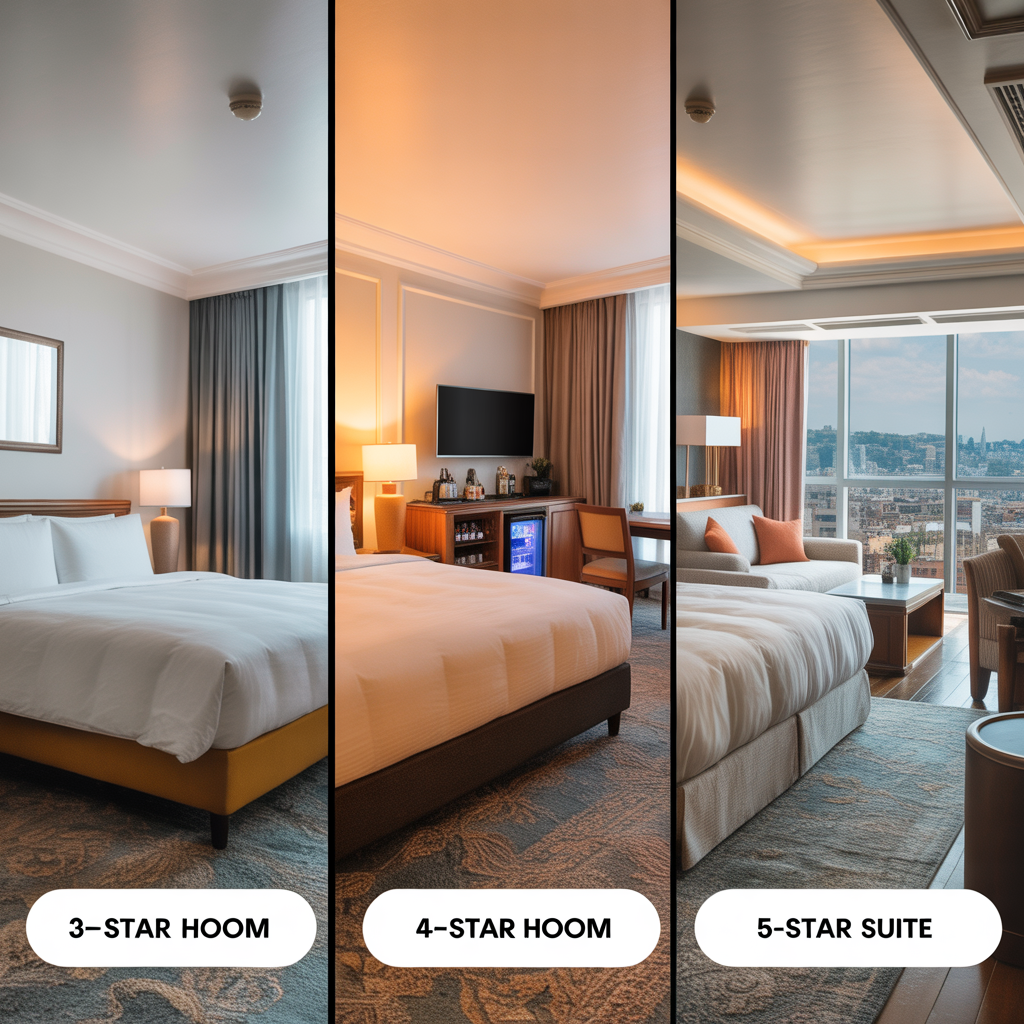
4-Star vs. 3-Star vs. 5-Star: Key Differences
Understanding where 4-star sits on the spectrum helps you make smarter booking decisions. Here’s a side-by-side comparison across key categories:
| Feature | 3-Star | 4-Star | 5-Star |
|---|---|---|---|
| Room Size | Standard | Larger, well-designed | Spacious, bespoke |
| Bedding Quality | Decent | Premium linens | Ultra-luxury, customized |
| Front Desk | Limited hours | 24/7, multilingual | 24/7, dedicated butler |
| Dining | Basic restaurant or café | Full-service restaurant & bar | Multiple fine dining venues |
| Room Service | Limited hours | Extended/24-hour | 24-hour, extensive menu |
| Gym | Basic or none | Well-equipped fitness center | Full spa & wellness complex |
| Pool | Sometimes | Usually yes | Multiple pools, cabanas |
| Toiletries | Generic brands | Premium brands | Luxury bespoke brands |
| Average Price/Night | $80–$160 | $150–$400 | $400–$1,500+ |
| Best For | Budget travelers, short stays | Business travelers, couples, families | Special occasions, ultra-luxury seekers |
The 4-star sweet spot is clear: you get the vast majority of features that make a hotel stay genuinely comfortable and enjoyable, without paying the dramatic premium that separates 4-star from 5-star pricing. For many travelers, the jump from 4-star to 5-star amenities simply isn’t worth the cost difference — especially for business trips or shorter stays.
Why 4-Star Ratings Can Be Misleading
Here’s the uncomfortable truth: not every hotel that calls itself 4-star actually is one — at least not by consistent, objective standards. Several factors can make the “4-star” label misleading for unsuspecting travelers.
Self-Proclaimed Ratings
In countries without mandatory classification systems, hotels are free to assign themselves whatever star rating they believe (or hope) they deserve. This means a property might display four stars on its signage and website without a single inspector ever having set foot in the lobby. The result? Significant variation in quality among hotels all claiming the same rating.
Regional Differences
A 4-star hotel in New York City, a 4-star hotel in rural Portugal, and a 4-star hotel in Bangkok are three very different experiences — even when all three are legitimately certified. Regional standards, cost of living, and local expectations all influence what “4-star” actually delivers in practice. Generally speaking, 4-star hotels in Southeast Asia and Eastern Europe tend to offer facilities and service levels that would comfortably qualify as 5-star in North America, while the same rating in some parts of the developing world may represent something closer to a Western 3-star experience.
Online Ratings vs. Official Star Ratings
This is perhaps the most important nuance for modern travelers. The star rating displayed on Booking.com or Expedia is not the same as an officially certified star rating. These platforms often blend self-reported amenity data, user review scores, and internal algorithms to generate their displayed star ratings — with no mandatory link to official tourism board classifications. A hotel can have a 4.2 guest rating on Booking.com and two official stars from the national tourism board, or vice versa.
TripAdvisor’s “Traveler Rating” — on a 1 to 5-bubble scale — reflects guest satisfaction, not facility quality. A budget hotel with exceptionally friendly staff might outperform a legitimately luxurious property in customer reviews simply because it exceeds expectations set by its lower price point.
The Rise of Underdelivering “4-Star” Hotels
The hospitality market is crowded with hotels that have aged beyond their star classification. A property that earned a legitimate 4-star rating in 2005 may not have updated its rooms, gym equipment, or technology infrastructure to keep pace with evolving standards. It still carries the star — but the experience it delivers tells a different story. Always check the dates of recent guest reviews to get a current picture of any property you’re considering.
How to Verify a Hotel’s Star Rating Before Booking
Don’t rely solely on what a hotel tells you about itself. Here are practical steps to verify the quality of any property before you commit:
- Check official tourism board websites: Most European countries, Australia, and many others maintain searchable online databases of officially classified hotels. For example, France’s Atout France and the UK’s AA Hotel Rating system both have public directories.
- Cross-reference with Forbes Travel Guide: Forbes conducts rigorous anonymous inspections with over 900 standards. Their ratings are among the most credible in the industry.
- Look up AAA Diamond ratings: For North American properties, AAA Diamond ratings provide a reliable independent benchmark.
- Read recent guest reviews on multiple platforms: Don’t read just the top review or the average score — scan the most recent 20–30 reviews specifically and look for patterns in complaints and praise.
- Watch for red flags in listings: Vague descriptions of amenities, stock photos rather than actual hotel photos, lack of specific facility information, and no mention of the rating authority are all warning signs worth heeding.
Is a 4-Star Hotel Worth the Price?
Across most major global cities, 4-star hotels typically range from $150 to $400 per night, though prices can rise significantly in premium locations like central London, Paris, or Manhattan. In secondary cities and emerging destinations, the same quality often comes at $100–$200 per night — making 4-star an exceptional value proposition.
Who Benefits Most from Staying at a 4-Star Hotel?
- Business travelers: The combination of reliable WiFi, business centers, meeting rooms, and professional service makes 4-star the default choice for corporate travel. Expensing a 5-star stay is hard to justify; a 4-star is both comfortable and defensible.
- Couples: 4-star hotels strike the right balance of romance, comfort, and price — perfect for anniversary trips, weekend getaways, and honeymoons where budget is a real consideration.
- Families: Larger rooms, pools, and on-site dining make 4-star properties genuinely family-friendly without the intimidating formality of ultra-luxury hotels.
When Does 4-Star Make More Sense Than 5-Star?
For trips where you’ll spend most of your time exploring, dining out, and experiencing the destination — rather than at the hotel itself — the incremental cost of 5-star is rarely justified. A 4-star hotel gives you everything you need for a comfortable, enjoyable stay, and the money saved can fund extra experiences, longer trips, or better dining out in the city.
Tips for Getting 4-Star Quality at Lower Prices
- Book during the hotel’s off-season for dramatically lower rates (often 30–50% less)
- Join hotel loyalty programs — even free membership often unlocks room upgrades, early check-in, and late checkout
- Book directly through the hotel’s own website, where many properties offer rate matching plus perks not available on third-party platforms
- Consider booking midweek rather than weekends in business-focused destinations where demand (and price) drops sharply on weekdays
- Use rate comparison tools and set price alerts for your target dates

Top Examples of True 4-Star Hotel Experiences
When it comes to consistently delivering on the 4-star promise, certain hotel brands have built reputations that hold up across geographies and market cycles:
- Marriott Hotels: The flagship Marriott brand sits squarely in the upper-upscale category, consistently delivering reliable service, modern rooms, and solid dining options across its global portfolio.
- Hilton Hotels: Hilton’s core brand (distinct from Conrad at the luxury end and Hampton Inn at the budget end) is a dependable 4-star performer with a strong focus on business traveler amenities.
- Hyatt Place: Particularly popular in North America, Hyatt Place delivers a clean, modern 4-star experience at prices that often undercut competitors, making it a frequent traveler favorite.
- Novotel (Accor): Accor’s Novotel brand has established itself as a reliable upscale option across Europe, Asia, and Australia, with consistent design standards and family-friendly facilities.
- Courtyard by Marriott: Originally designed specifically for business travelers, Courtyard properties offer structured, efficient 4-star comfort in a no-frills-but-no-compromises package.
What distinguishes these brands from generic competitors is consistency. You largely know what you’re getting before you arrive, which has enormous value when traveling to an unfamiliar city. The real traveler experience at these properties rarely strays far from what their marketing promises — which is more than can be said for many independent hotels wearing the same star label.
Conclusion
A 4-star hotel isn’t just a number on a website — it represents a specific, meaningful standard of comfort, service, and experience that sits above the functional and below the extravagant. When the rating is legitimate and current, you can expect spacious, beautifully furnished rooms, professional 24/7 service, quality on-site dining, a proper fitness center, and an overall experience that feels polished and personalized.
The most important lesson here is that the star itself is only as reliable as the system behind it. Always verify ratings through official sources, read recent guest reviews, and match the hotel tier to your actual travel purpose. If you’re in town for a packed itinerary of sightseeing, a well-chosen 3-star might serve you just as well. If you’re traveling for business or celebrating something special, a certified 4-star property hits the sweet spot between comfort and value that’s hard to beat.
Ready to find a 4-star hotel that actually lives up to its rating? Explore our curated selection of verified upscale hotels at RoomNetic.com — handpicked for travelers who value quality, transparency, and genuine value for money.
Frequently Asked Questions
What is the difference between a 4-star and 5-star hotel?
A 4-star hotel offers upscale comfort with premium amenities, professional service, and quality dining — while a 5-star hotel provides ultra-luxury experiences including butler service, multiple fine-dining restaurants, bespoke facilities, and a heightened level of personalization. The price gap is significant, often $200–$1,000+ per night depending on location, and the experience difference is most pronounced in service depth and exclusivity rather than physical comfort alone.
Are hotel star ratings standardized worldwide?
No. There is no single global standard for hotel star ratings. Different countries, regions, and private organizations use different criteria, inspection processes, and rating systems. A 4-star hotel in Germany (subject to rigorous government-regulated criteria) may not be equivalent to a 4-star self-declared property in a country with no mandatory classification system.
What amenities should I expect at a 4-star hotel?
At a genuine 4-star hotel, you should expect premium bedding, larger rooms, a minibar, high-speed WiFi, a flat-screen TV, quality branded toiletries, a bathtub or large shower, 24/7 front desk and concierge service, on-site restaurant and bar, room service, a well-equipped fitness center, and often a swimming pool. Business centers and meeting rooms are also common.
Can a hotel give itself a star rating?
Yes, in many countries and markets, hotels can self-assign star ratings without any official oversight or third-party inspection. This is a significant limitation of the global star rating system and a key reason why travelers should cross-reference hotel star ratings with official tourism board certifications and independent organizations like Forbes Travel Guide or AAA before booking.
Is a 4-star hotel considered luxury?
A 4-star hotel is classified as “upscale” rather than true luxury. It offers a high level of comfort and service that significantly exceeds mid-range, but true luxury begins at the 5-star level where service personalization, facility exclusivity, and experiential quality reach another tier entirely. That said, many 4-star properties — especially in price-competitive destinations — deliver an experience that feels genuinely luxurious relative to their cost.
What is a 4-star hotel on Booking.com or TripAdvisor?
On Booking.com and TripAdvisor, the star rating displayed may reflect a combination of self-reported amenity data, user review scores, and platform-specific algorithms — not necessarily an official government or independent organization certification. This means a 4-star hotel on these platforms should be treated as a starting point for research, not a guaranteed quality benchmark. Always read recent guest reviews and verify official classifications separately before booking.